
Healthy aging is everywhere right now – from GLP-1 conversations to collagen powders, red light masks, and “anti-aging” routines that make big promises. As a registered dietitian, I want to bring the conversation back to what actually has research behind it. These are the evidence-based nutrition strategies worth paying attention to support long-term health.
“Healthy aging” is such a broad term: what does that even mean? I suppose it can mean different things to each individual.
In nutrition research, healthy aging usually refers to more than just living longer. It often includes staying free from major chronic disease, maintaining physical function, preserving cognitive health, supporting mental well-being, and being able to stay independent with age.
So, in this post, we are looking at nutrition strategies that matter most for healthy aging – which is not necessarily about shrinking your body or chasing every new wellness trend. I tried to select the ones with the strongest evidence behind them with a few newer areas of research worth paying attention to.
1. Plant-Based Protein May Need More Attention
One thing that isn’t just another fad: protein. As we age, it is more important than ever to eat enough protein to preserve lean muscle mass.
A large 2024 American Journal of Clinical Nutrition study followed women under 60 to determine long-term health outcomes. It was found that protein intake, in general, was associated with healthier aging with an increase in plant-based protein resulting in even better physical and mental health.
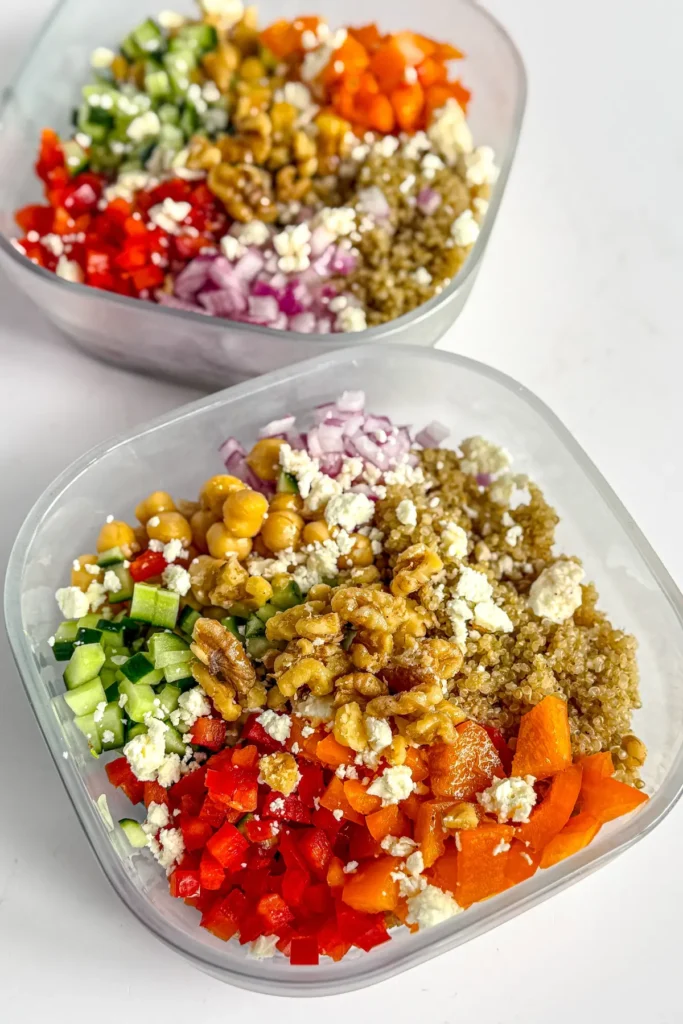
A plant-forward diet does not have to mean vegan, and it does not mean every plant-based food is automatically healthy. The strongest research seems to point toward eating more high-quality plant foods like beans, lentils, whole grains, nuts, seeds, fruits, and vegetables rather than simply replacing animal foods with refined or highly processed plant-based foods.
Plant-Based Meal Resources
2. Colorful plant foods may support aging through more than vitamins
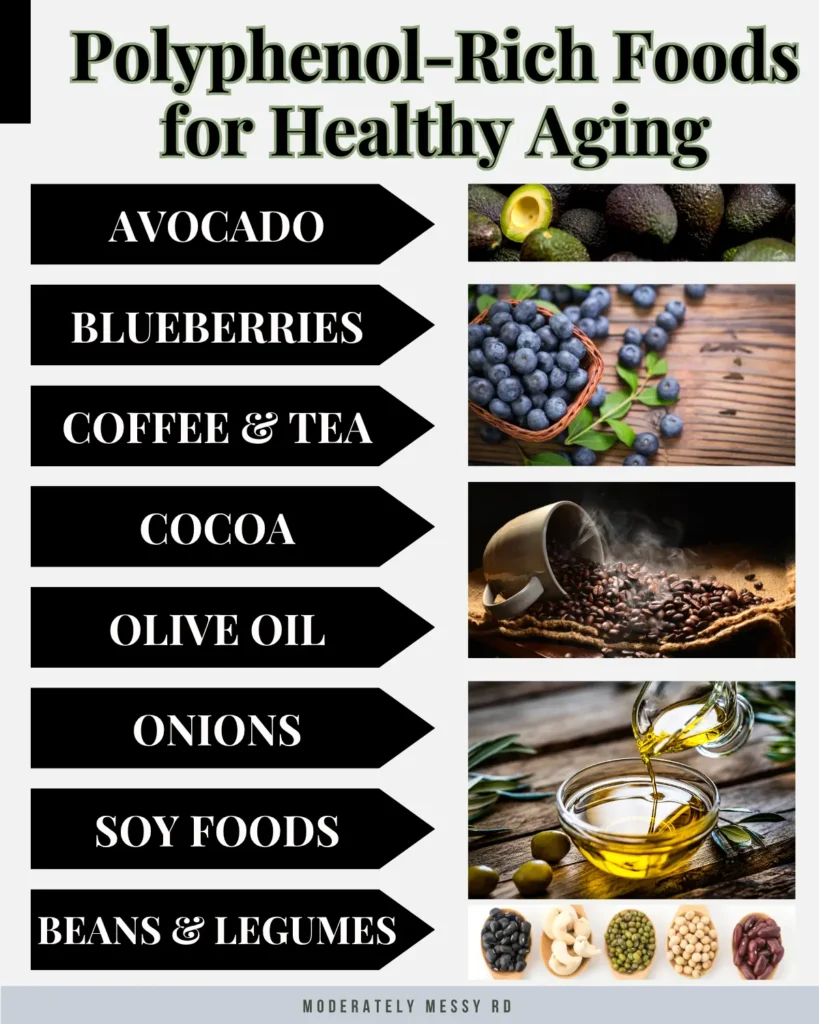
Polyphenols are a diverse group of naturally occurring compounds found in plant-based foods like fruits, vegetables, whole grains, nuts and legumes. This also includes soy products, coffee, tea, cocoa, red wine, herbs and spices.
There are thousands of different polyphenols, like flavonoids, lignans, and resveratrol (in red wine). These compounds have antioxidant, anti-inflammatory, and anti-carcinogenic properties!
They can improve blood lipid profiles, lower the risk of neurodegenerative disease, improve cognitive function, and act as prebiotics to promote the growth of beneficial gut bacteria.
Therefore, foods that contain polyphenols can promote healthy aging by reducing inflammation, oxidative stress, epigenetic alterations, and protein homeostasis.
In the Nurses Health Study, participants who consumed the most flavonoid-rich foods had 15% lower risk of frailty and a 12% lower risk of poor mental health.
Drink Coffee
Coffee is actually one of the best sources of polyphenols. In fact, numerous studies have shown that moderate caffeine intake (about 3-5 cups per day) is associated with lower risk of chronic diseases and reduced risk of cognitive disorders like Parkinson’s disease!
As a busy mom and someone who drinks quite a bit of coffee, we love to hear it! Tea has also exhibited similar effects, however, the evidence is not quite as strong as coffee.
That being said, there are pros and cons to caffeine consumption. For example, a 2021 review on caffeine stated that at low doses, caffeine has a positive effect on cognitive performance, memory, and brain function. However, at high doses, it may be responsible for nervousness, and anxiety.
It also stated that the positive effects of caffeine are observed in many diseases (AD, PD, asthma, cirrhosis, fibrogenesis, kidney stones, some cancers) but also negatively affects Huntington’s disease, arrythmia, tachycardia, and lung cancer.
Of Course, We need a Lot More Research
Even though various polyphenols have been proven to prevent or treat age-related diseases in many animal studies, there is still a lot of questions to answer with clinical research.
The Best Foods to Eat
These are some of the best polyphenol-rich foods for aging.
- blueberries/berries
- apples
- avocados
- citrus
- tea
- cocoa/dark chocolate
- herbs/spices
- onions
- soy foods
- beans
- extra-virgin olive oil, especially for cognitive disorders.
3. Eat More Nuts
Numerous studies (even randomized controlled trials) have shown that incorporating nuts into a regular diet significantly reduced total and LDL cholesterol levels and lowered risk of many chronic diseases, like cancer, type 2 diabetes and cardiovascular disease!
This could be peanuts as well as tree nuts. So, in a nutshell (pun intended), daily habitual consumption of nuts can promote healthy aging! And it has been backed up by a lot of clinical research.
4. Focus on Carbohydrate Quality
Low carb or ketogenic diets may support faster long-term weight loss, however, most of the evidence we have shows that carbohydrate quality instead of restriction provides better long-term health outcomes.
A handful of systematic reviews and meta-analyses shows that minimally processed grains, legumes, whole fruits, and non-starchy vegetables are protective against obesity, diabetes, cancers, and even mortality rate!
5. Give The Mediterranean Diet a Try
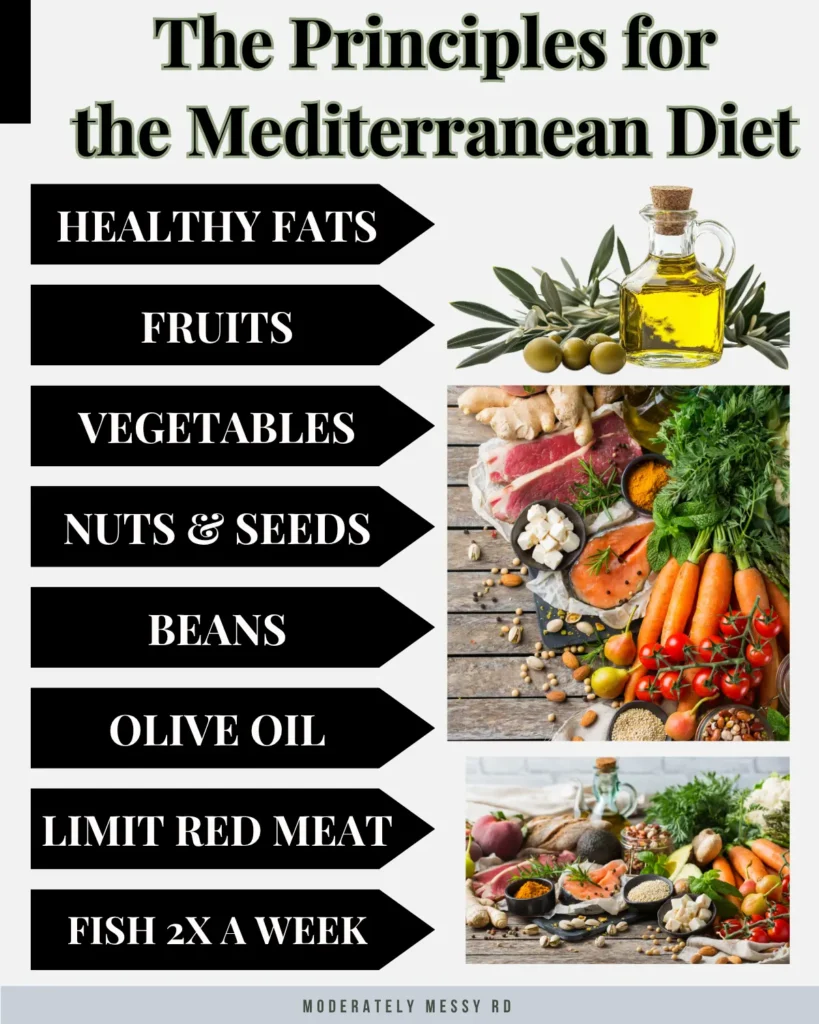
I explain to many of my patients that the Mediterranean Diet is a healthy eating approach, not an actual “diet” and it is not necessarily “Mediterranean food”.
The main features of the diet include an abundance of plant foods such as fruits, vegetables, whole grains, nuts and legumes. Olive oil is the main source of fat and fish and poultry are consumed in low to moderate amounts. There is limited consumption of red meat.
In 2021, an extensive review of studies was published on the Mediterranean Diet. What this means is that there is a lot of clinical research that has found this approach to eating has a significant impact on long-term health and aging.
Specifically, a reduced risk of obesity, type 2 diabetes, hypertension, dyslipidemia, CHD, stroke, and heart failure. And, of course, reduced mortality and slower progression of cognitive-decline.
Mediterranean Diet Resources
6. Gut microbiome, estrogen, and menopause
I talk a lot about how our gut microbiome is associated with so much more than just healthy digestion – and with aging, it’s no different. In fact, there is newer research that states changing the gut microbiota through prebiotics and probiotics can help regulate women’s estrogen during menopause.
In a Nutshell
The decrease in estrogen during menopause affects the composition of our gut microbiome, directly impacting the risk of lipid metabolism disorders, cognitive disorders, emotional disorders and osteoporosis.
Now, what does this mean? It just means that our gut is closely linked to our health during and after menopause – and there is still a lot of research to be done on potential treatments to improve our gut.
That being said, we know that prioritizing prebiotic fiber to feed the beneficial gut bacteria as well as consuming probiotic-rich foods can help improve the abundance and diversity of our microbiome!
Prebiotic Fiber
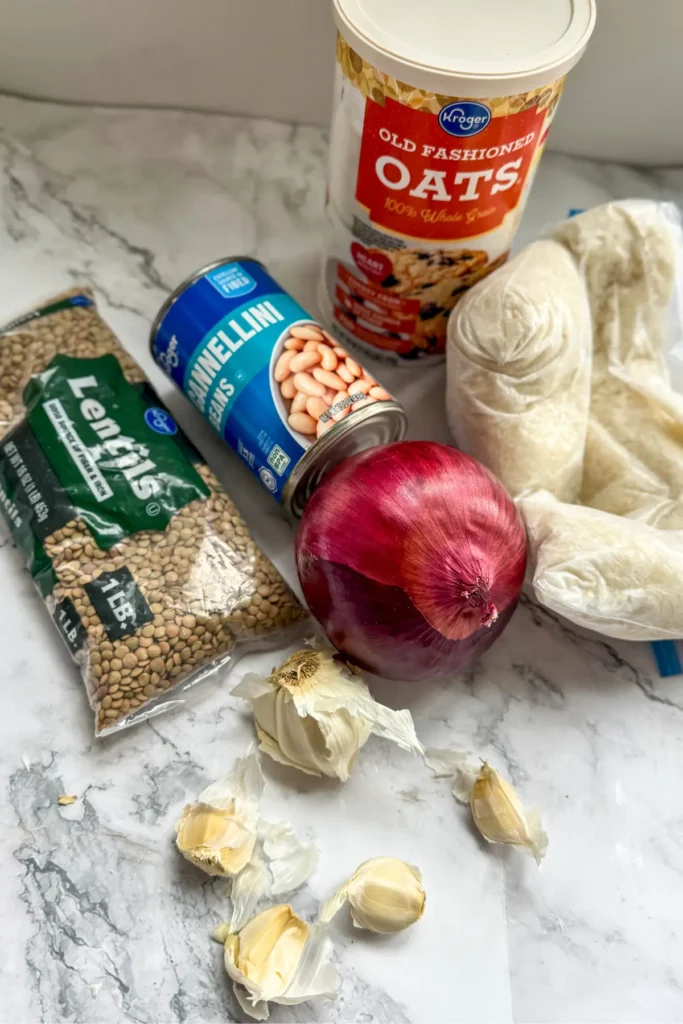
Prebiotic fiber is a type of fiber that feeds the beneficial bacteria in our gut. When you eat foods rich in prebiotic fiber, your gut bacteria ferment that fiber and produce compounds called short-chain fatty acids, which support digestion, gut health, and overall wellness.
You can learn more and get my free grocery list by list by reading my Prebiotic Foods Guide.
Probiotics
Probiotics are defined as live microorganisms that, when administered in adequate amounts, confer a health benefit to the host. To be considered a probiotic, the live microorganism must be a characterized strain with health benefits that have been scientifically proven.
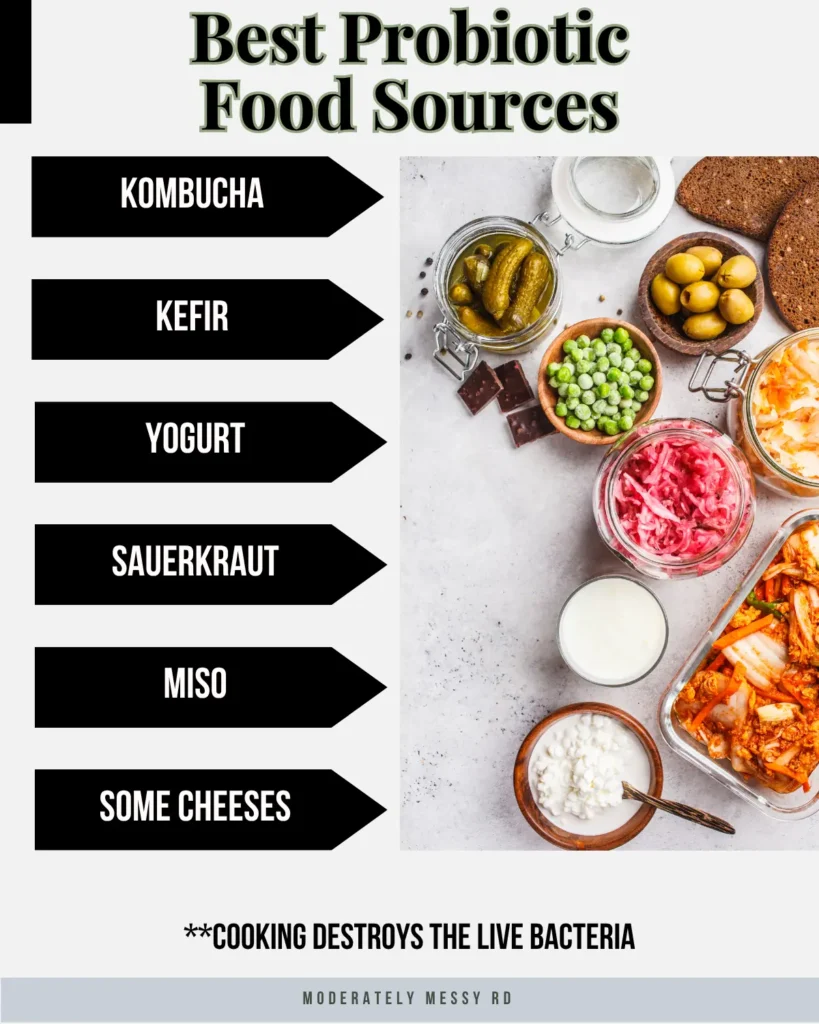
The best practice is to look for products which not only state there are probiotics in it, but list the specific strains as well! Most commercial yogurt will have probiotics – but Activia yogurt specifically lists the strain B. (animalis) lactis CNCM I-2494. The Chobani yogurt that I use lists 6 live, active cultures on the label.
If you follow strategy #1, #4, and #5, you will most likely be consuming a variety of plant-rich foods with prebiotic fiber.
7. Creatine & Resistance Training
One of the most important healthy aging strategies is preserving muscle and strength, especially because muscle mass and function naturally decline with age. Resistance training is the foundation, but creatine is one supplement with fairly strong research behind it when used alongside strength training.
Creatine helps support short bursts of high-intensity activity by helping regenerate ATP, the body’s quick energy source for muscle contraction. In older adults, research suggests creatine supplementation combined with resistance training may help improve lean mass and strength, though effects on bone health are less consistent.
Some research suggests creatine may also have cognitive benefits in older adults, but this area is still emerging.
A 2026 published review of six studies stated that creatine may have cognitive benefits for older adults, however, the current evidence is limited and much more research is needed.
8. Prioritize Key Nutrients for Bone, Muscle, and Heart Health
As women age, certain nutrients deserve more attention because they support the systems most closely tied to healthy aging: bones, muscles, heart health, blood pressure, and metabolic function.
Calcium and vitamin D are especially important for bone health, particularly as bone loss risk increases after menopause. Magnesium also plays a role in muscle function, bone health, blood pressure, and glucose metabolism.
Potassium is another underrated nutrient for healthy aging because potassium-rich foods can help support healthy blood pressure and cardiovascular health for many people. The American Heart Association’s 2026 dietary guidance emphasizes dietary patterns rich in vegetables and fruits to increase potassium intake, along with reducing excess sodium.
Diet Recommendations
Regularly include nutrient-dense foods like Greek yogurt, milk or fortified plant milk, salmon, eggs, beans, lentils, potatoes, squash, leafy greens, nuts, seeds, avocado, and fruit.
As always, supplementation should be individualized, especially for vitamin D, calcium, iron, and potassium.
I know there is still so much to come in regards to healthy aging and nutrition. Women’s health is just one of those areas that I feel was not prioritized and is just now getting the attention it deserves! I can’t wait to see what the recommendations are in 5-10 years. Thank you for reading! I hope this helps.
This is a very informative article. I need to eat healthier!
Thank you! It is so hard to consistently eat healthy but agining definitely seems to be a big motivator!