
If eating healthy feels harder than it should, it’s probably not because you’re doing something wrong – your brain is exhausted! By the end of the day, decision fatigue has set in from all the choices you’ve already made. The solution isn’t more motivation or better willpower, it’s fewer decisions – and I’ve got some realistic ways to help.
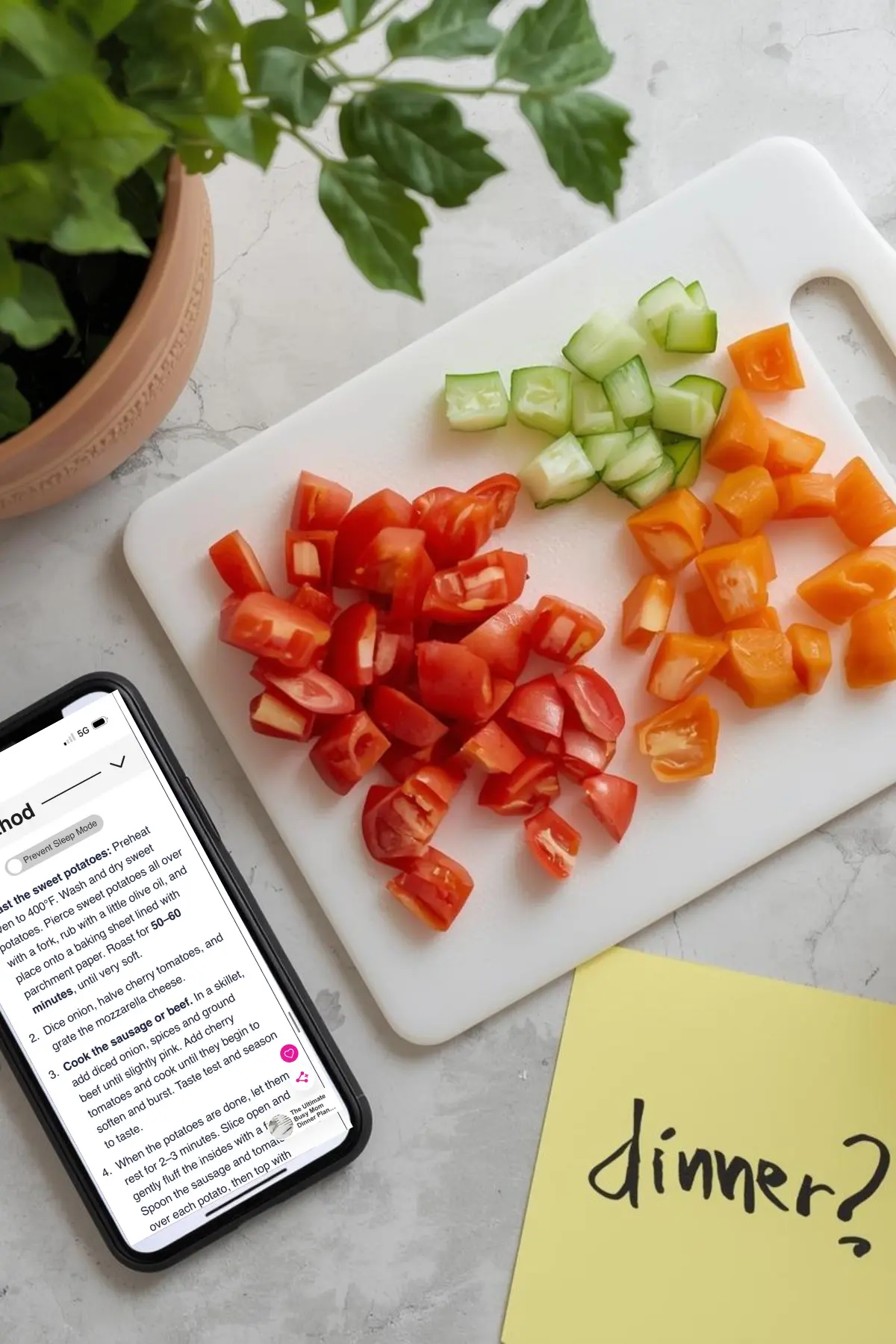
Let’s paint the picture of the typical tired mom. By noon, you’ve already made dozens of decisions – what your kids wear, what needs to get done, what everyone ate for breakfast.
By the late afternoon, the thought if figuring out dinner feels overwhelming. Not because you’re lazy or you don’t care about your health. That constant decision-making adds up, and by 5 PM, your brain is looking for relief, not another choice to solve.
And once you understand that, the solution isn’t more motivation or better willpower. It’s fewer decisions. These ideas might just be what you need to somewhat enjoy making a healthy dinner for you and your family.

This is Decision Fatigue
You are not necessarily bad at eating healthy – you are just so tired of always deciding what is for dinner.
The Real Problem: Too Many Micro-Choices
Maybe there is another way of doing things.
Yes, I talk a lot about how to build healthy and filling meals. However, I think many moms already know how to build a healthy plate. They know protein matters. They know veggies are important. They know what would be a “better” choice.
But after a full day of answering questions, managing schedules, and making decisions for everybody else, by dinnertime, your brain wants relief, not nutrition education.
So, you won’t hear any preaching from me in this post – just solutions to the real problem: too many choices and not a good enough system.
That’s not to say that “more recipes” isn’t helpful – it depends on the system that works for you and your family.
Why Nutrition Feels Especially Hard for Moms
There’s no single “right” way to eat – and that alone makes nutrition harder than it needs to be. However, there is so much “food noise” these days: people telling you to eat this way or take this (I am guilty of this, sorry!).
Then you add in that moms aren’t just making food choices for themselves. They’re balancing their own health, kids’ preferences (and strong opinions), budgets, time, energy, and what’s realistically available on a random Tuesday night.
That means every meal comes with layers of decisions – not just what’s healthy, but what will work for everyone right now. So my hope is that you find one of these solutions really useful.
You Don’t Need Better Decisions – You Need Fewer of Them
Most nutrition advice focuses on making better choices. But when decision fatigue is the real issue, the answer isn’t more motivation or willpower – it’s fewer decisions.
That’s why so much of my content focuses on systems instead of perfection: default dinners, repeat meals, simple formulas, and meals that are “good enough,” not flawless.
I have tried to build my website for moms in real life – whether you cook most nights from scratch, lean heavily on convenience foods, or land somewhere in between. Because healthy eating doesn’t require doing everything “right.” It requires support that fits your actual season of life.
Keep scrolling for the solutions that can help you create less decisions for yourself.
Simple Systems That Reduce the Mental Load
These are adaptable solutions that you can use with flexibilty. These systems are to help you work smarter, not harder. I am sorry but I could not fit everything about each of systems in this post so you may need to click out for more details.
Small Changes That Immediately Reduce Mental Load
The first two are my personal preferences.
The No Stress Dinner Formula
A dinner formula that encourages balanced, nutritious meals without strict meal planning. Meals that will keep you full and satisfied!
Below is an infographic with some mix-and-match ideas. This is quite literally the basis for every dinner I make, even if I follow a recipe.

This formula can be used for salads, stir-fries, sheet-pan dinners, casseroles – you name it. You can adjust it based on what’s in your kitchen, what your family likes, and how much effort you want to put in.
Who It Works Best For
For moms who want a simple structure without strict rules. If you don’t love to ‘meal plan’ and look at every single ingredient in a recipe to put onto your grocery list for everyday.
Does this solution sound like it could work for you? –> Read more by clicking here.
Create a Meal Plan Framework
A flexible meal planning framework saves time, makes dinner feel less overwhelming, and can be customized to fit your family’s preferences. Once you build it, you’re never starting from scratch again – just plugging meals into a system that already works.

The beauty of the framework is that it stays the same at the big-picture level, but the recipes inside it can shift around depending on your week. It sounds SO simple because it is – it is just taking the time to put the system in place that takes a bit of work.
When It Works
I mean, this one really is a “system” that encompasses a lot of these other solutions as well. You can use the no-brain dinner recipes, the formula, and the power bowls in your meal plan framework. A framework requires organization and consistency but flexibility, too.
If this one feels like it could make dinners easier, read more –> CLICK HERE.
Have a Go-To List of No Brain Dinner Recipes
This one kind of goes hand-in-hand with the meal plan framework or even the power bowl section. Keep a (running) list of dinners for when you’re feeling lazy or overstimulated but you still want a well-balanced and filling meal.
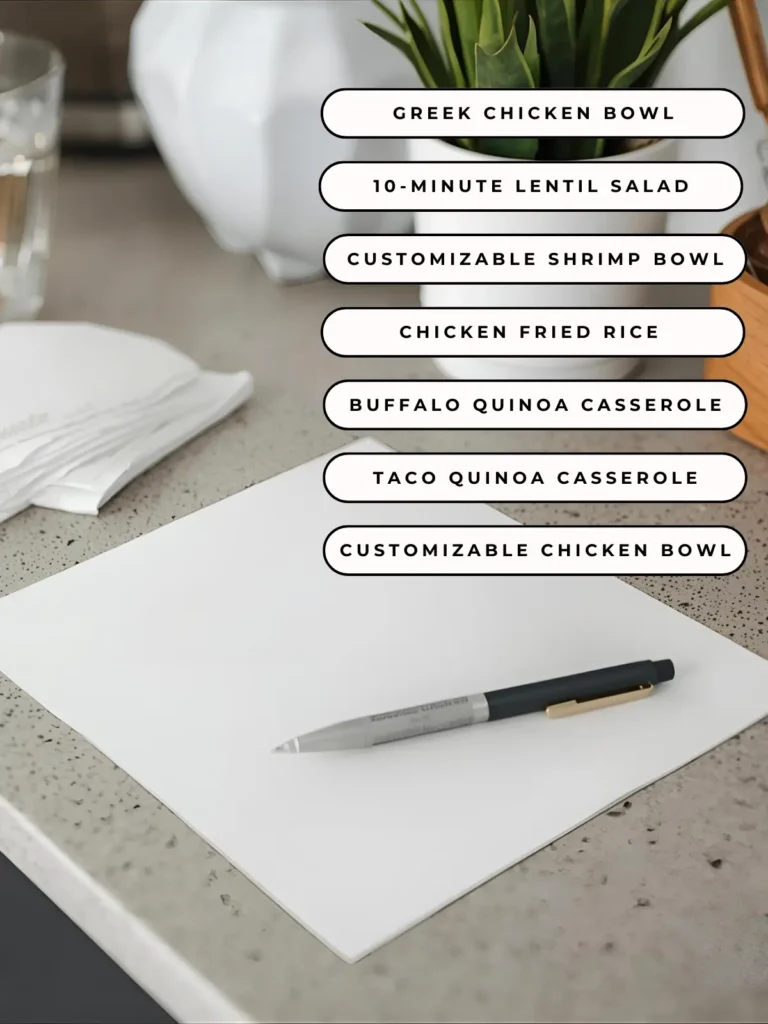
They’re for when you don’t want to search for a new recipe. Whether you use one each week or every other week, they simplify cooking dinner every single night.
Who It Works Best For
For nights when thinking feels impossible. If you have a really stressful job or many overstimulated days, this one is important!
Get some inspiration for no brain dinners by CLICKING HERE.
Try Theme Nights
A method to simplify meal planning. If each night has a “theme”, not only will your family stop asking you that question but it limits the choices or options of what is actually for dinner. The best part is that it’s easily customizable.
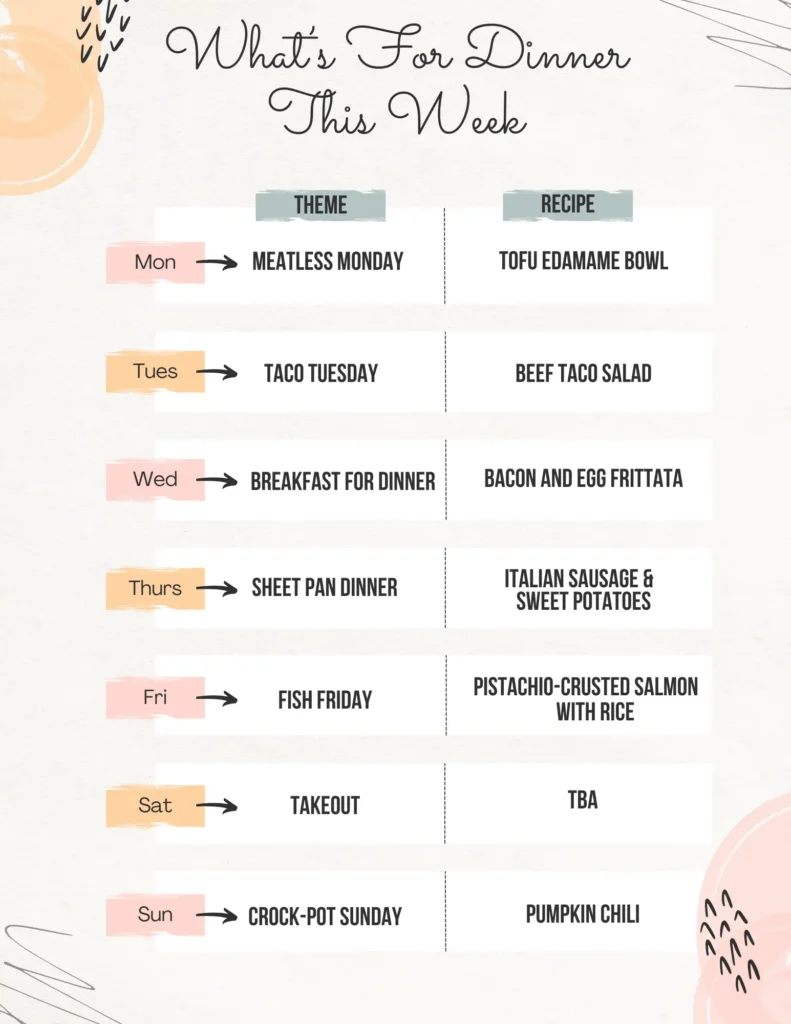
Theme nights introduce variety while also adding structure and routine. You can explore different recipes within the same category—like trying different taco fillings or pasta dishes—without straying too far from the theme. If some selected themes are health-focused, it will help to prioritize nutrients that you might not have otherwise.
Who It Works Best For
Moms who LOVE meal planning and thrive under structure but want a narrower selection of recipes.
Does this solution sound like it could work for you? –> Read more by clicking here.
Create Easy Power Bowls When You Don’t Feel Like meal Planning
High protein bowls are my favorite go-to dinner – they’re macro-friendly, easy to throw together and can be customized in so many ways!
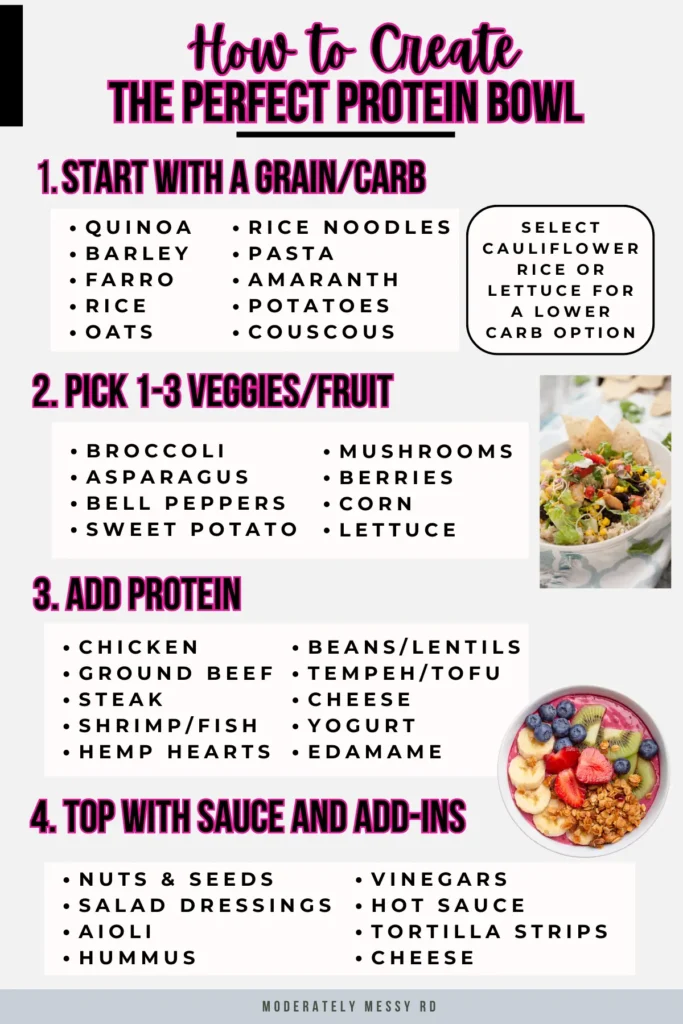
What I love about protein bowls is that they can be as simple or as complex as you want them to be. Start with a grain, add in 1-3 veggies (the more, the better), add protein source(s) and top with a flavorful sauce or any other add-ins.
Everything can be made from scratch – or you could just buy an already-made sauce from the store. Striking the right balance between nutrition and convenience makes life easier, while also prioritizing home-cooked meals.
Who It Works Best For
For those who loves balanced meals but hate meal planning. This one can overlap with the meal plan framework AND the no brain dinners. I include my customizable chicken and shrimp bowls in my framework, which I also consider to be “no brain dinners”.
For protein bowl inspiration, CLICK HERE.
Micro Meal Prep or 30-Minute Sunday Reset
Maybe you’re like me and you don’t love to plan OR meal prep – that’s where micro meal prep comes in handy. These small tasks, though, can be completed in less than 30 minutes yet make a big difference!

For example, I spent less than 15 minutes creating two high protein snack bowls (vanilla pudding), a yogurt dill pickle dip, a homemade dressing, and chopping vegetables and fruit. If I have tomatoes already diced, I am more likely to throw them into my egg burrito in the morning.
Who It Works Best For
Those that do not want a 2–3 hour Sunday prep or 10 identical containers of chicken and rice. Moms that want to grab healthier snacks that are already prepped or prefer to throw together power bowls of different variations. Or, even moms who prefer strategic snack plates that require no cooking for dinner.
CLICK HERE to download a 4-page printable with the above checklist plus a blank template as well, so that you can pick and choose what you want to prep each week! For more ideas & recipes, CLICK HERE.
Solutions That Cost a Little Extra Money
If none of those feel like they’re “it” and you need more support, here are some dietitian-created solutions at a cost! If you are a mom who needs LESS flexibility and a more rigid system – these options are for you.
Family-Friendly Dinners: The 3×5 Meal Prep Method
The 3×5 Meal Prep Method is a simple, realistic approach to getting dinners on the table. The method uses kid-friendly recipes that are broken into three prep steps, with each step taking less than five minutes, so prep can happen in small pockets of time earlier in the day.
Got 5 minutes on lunch break? Do a prep step. Got 5 minutes before pick up? Quick prep step.
This method includes three recipes per week, with a variety of chicken, meat or fish, and a plant-based option. Having three recipes builds flexibility into the week, allowing families to adjust based on changing schedules. The meals are designed to be family-friendly, deconstructed and to be served family style.
Who is this best for?
This was created by dietitian, mom of two, and creator of The Toddler Kitchen: Alison Ellis. This method significantly reduces decision fatigue. You have three family-friendly recipes (12 in total) that are flexible and deconstructed in style, supporting different preferences within the family.
Learn more about the system by CLICKING HERE.
14-Day High Protein and Fiber Meal Plan + Meal Planning Toolkit

This is a digital product created by me with a 14-day meal plan consisting of three meals and two snacks each day to promote a higher protein and fiber intake! While the recipes are not super kid-friendly, the meal planning toolkit is.
This system is best for:
Moms that really want to eat healthier and learn how to do just that with a rigid meal plan and a flexible toolkit with printables that can be used forever.
With 20+ easy recipes, weekly grocery lists, and step-by-step meal prep tips, you’ll spend less time stressing over food and more time enjoying it. The toolkit was designed to help with less decisions as well with easy cheat sheets + systems you can put in place (kind of like this whole post encompassed into a digital product)!
If you want to learn more, CLICK HERE.
Which One Will Help You Most?
As always, I truly hope one of these systems or solutions helps out my fellow moms in some way! Which one seems like the solution that would work for you? Or, is there something you’re doing that helps you out that isn’t mention here?
I would love to know in the comments! Let’s help each other out.