
Fiber is having a moment right now, and as a dietitian, I’m honestly thrilled about it. The “fibermaxxing” trend has helped bring attention to one of the most overlooked nutrients in the American diet. But there’s just one problem: trying to pack huge amounts of fiber into one meal can lead to discomfort and doesn’t always support steady blood sugar or satiety throughout the day.

The buzzy term fibermaxxing basically means eating as much fiber as possible. However, this isn’t always the most realistic or even benefit friendly approach to increasing overall fiber intake.
Many dietitians, such as myself, are advocating for a more practical alternative: fiber layering. Instead of cramming huge amounts of fiber into one meal, fiber layering emphasizes distributing fiber across the day and pulling it from a variety of whole foods.
This approach can help increase your overall intake while being much gentler on digestion. A more even sprinkle of fiber throughout the day can help with satiety and blood sugar control, too!
What’s the Deal with Fibermaxxing?
Fibermaxxing is trending right now, essentially encouraging people to increase their fiber intake. However, it’s missing a lot of context.
The problem with fibermaxxing is that when people try to suddenly double their fiber intake, it can lead to bloating, gas and digestive discomfort. It does take your digestive system time to adjust when you’re introducing more fiber into your diet.
Plus, there is the topic of fiber diversity and how meals with a higher fiber content can assist with weight management.
Without the context, there are many who eat two low carb tortillas or one 30g fiber smoothie and call it a day in regards to this “fibermaxxing” trend.
There is a method to the madness: layering, or what I like to call it, “fiber sprinkling”. Fiber layering won’t magically eliminate bloating – but it can make increasing fiber much easier to tolerate.
Benefits of Fiber
Consuming a higher fiber diet can do so much more than just support healthy digestion!
Some of the most important benefits of fiber:
- It can help to lower blood glucose levels, reduce postprandial blood glucose or insulin levels.
- Soluble fiber can lower total and LDL cholesterol levels!
- Fiber can assist with lowering blood pressure and improving overall heart health.
- Certain types of fiber can contribute to decreased transit time.
- Some types of fiber can help reduce overall calorie intake and increase satiety, or feelings of fullness.
- Fiber helps to feed the good bacteria in our gut, which then increases the diversity and abundance of this very beneficial bacteria. A more diverse microbiome is associated with better immune support, mental health, and lower risk of many chronic diseases.
Importance of Fiber Diversity
This is one part of the fiber hype that needs a lot more clarity: not all dietary fiber is created equally.
Although all foods that contain fiber contribute towards the recommended daily intake, different types deliver different health benefits based on their physiochemical properties (solubility, viscosity) and physiological effects (fermentability).
That is why the corny phrase “eat the rainbow” is so important!
For example, oats have a type of fiber called β-glucan. This is soluble, viscous fiber that helps reduce serum cholesterol and improve glycemic control.
On the other hand, wheat and rye contain more insoluble fiber, which adds bulk to stool and helps promote regular bowel movements.
Then you have functional foods, like Low Carb Tortillas and Poppi Sodas. Many of these products contain added fibers, such as inulin or chicory root fiber, which are highly fermentable fibers that can help increase the fiber content of a product.
This specific type of fiber is good for creating a more diverse gut microbiome but the cholesterol lowering benefits are not as significant. For some people, large amounts of these fibers can also contribute to digestive discomfort.
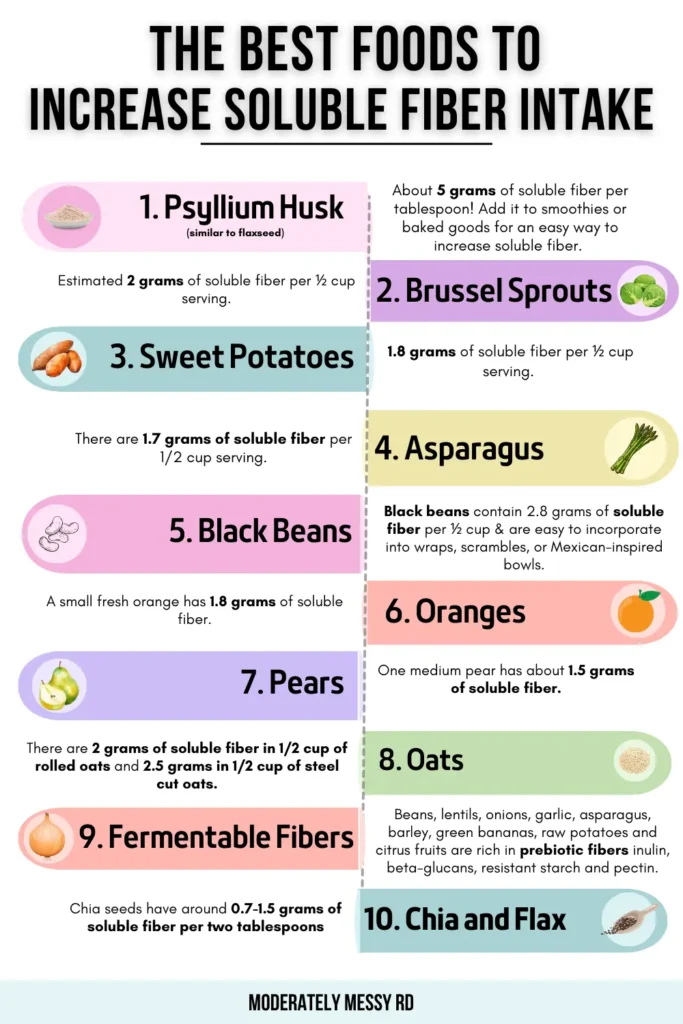
Above is a list of some of the best soluble fiber foods! Soluble fiber is the type that really makes a difference in terms of weight management, satiety, fullness and blood sugar control. Learn more: Why Soluble Fiber Might Be the Secret to Feeling Your Best.
What Is Fiber Layering?
So, we went over some of the benefits of fiber and fiber diversity so that you can understand why this layering approach really makes sense.
Fiber layering = spreading fiber-rich foods throughout the day instead of loading them all into one meal. You could also call this “fiber stacking” or my favorite: “fiber sprinkling”.

Why It Works
This approach works by spacing fiber out in a way your body can actually handle – supporting steady energy, better fullness, and less of the bloating that can happen when you load it all into one meal.
Let’s break it down even further.
Fiber is Like a Speed Bump
Fiber acts like a speed bump for digestion. It slows down how quickly food moves through your digestive system and how quickly carbohydrates are absorbed. When you include fiber at multiple meals, you’re adding speed bumps throughout the day instead of just one big one.
To summarize: fiber slows gastric emptying, supports steadier blood sugars, and promotes feelings of fullness.
Benefits of “Sprinkling” Fiber Throughout the Day
When fiber is distributed throughout the day, these benefits happen again and again at multiple meals – not just once.
Smaller, repeated amounts of fiber also tend to be easier on digestion compared to consuming a large amount at once, especially when that fiber is highly fermentable.
Think of It Like a Campfire
Think of fiber like the logs that keep a campfire burning steadily. If you throw all the logs on the fire at once, it burns quickly and then dies out. But if you add logs gradually throughout the evening, the fire stays steady for much longer.
Fiber works in a similar way – supporting more steady energy, appetite, and digestion when it’s layered throughout the day.

Example breakfast smoothie (25-30g fiber):
- 2 tbsp chia seeds → 10g fiber
- 1 tbsp ground flax → 2–3g fiber
- ½ cup dry oats → 4g fiber
- 1 cup raspberries → 8g fiber
- greens powder → 1–2g fiber
Now, if this is how you get your fiber in for the day realistically, and you feel good, keep doing it. But there are obviously benefits to a more layered approach, as I was saying!
What a Day of Fiber Layering Looks Like
Keep it simple and realistic while also practicing this approach and ensuring fiber diversity by including at least two veggies or fruits with each meal. Ask yourself: what can I add to this meal to increase the fiber content?
This day is estimated to provide about 30 grams of fiber!
Breakfast

Whipped Cottaged Cheese Breakfast Toast with Balsamic and Berries (10g fiber). Chia seeds are adding to whipped cottage cheese to create a thicker, “cream cheese” like spread. Paired with a slice of whole wheat toast and berries, this breakfast has a great balance of protein and fiber plus some major fiber diversity.
Lunch

Lazy Chicken Caesar Power Bowl (6.7g fiber). A combination of chickpeas, cherry tomatoes, romaine lettuce, and quinoa increase the fiber content and make this an easy, well-balanced bowl with 48 grams of protein!
Dinner

Feta Pasta with Garlic Yogurt (8g fiber). Higher fiber noodles plus artichokes and sun-dried tomatoes bring this healthier pasta to 8g fiber per serving.
Snacks
Dark Chocolate Peanut Butter Stuffed Dates (3.5g fiber).

One medium apple and a tablespoon of peanut butter (5g fiber).
More Resources
Easy Ways to Layer Fiber Into your Meals

Tips to Reduce Digestive discomfort
Introducing Fiber Can Cause:
- bloating
- excessive gas
- stomach discomfort
Sometimes, this is a sign that you are in the “adjustment period”. Stick with it! Otherwise, you might want to ensure you are doing the below tips.
- increasing gradually over a course of a month or so.
- drinking enough fluids.
- spreading fiber across meals.
- soaking beans and lentils.
- taking Gas-X or Beano before meals with beans.
An Important Note If You Have IBS
Fiber needs and tolerance can vary widely. For some people, large amounts of fiber – especially highly fermentable fibers -can trigger bloating, gas, or discomfort.
Spreading fiber intake throughout the day and gradually increasing intake may help improve tolerance. Having IBS doesn’t mean avoiding fiber – it means finding the right type, amount, and timing for you.
I hope you found this post helpful! Subscribe to my newsletter for a FREE 33-page e-book to prioritize your health and biweekly updates with evidence-based nutrition and high protein and fiber recipes.
When I initially commented I clicked the “Notify me when new comments are added” checkbox and now each time a comment
is added I get three e-mails with the same comment.
Is there any way you can remove people from that service?
Thank you!
Thank you for letting me know! I don’t see an original comment, either, but the best course of action would be to scroll down that email and click “unsubscribe” if that is an option. Let me know if that doesn’t work and I will look into it more!
Hello, I was looking for an article that provides information on specific numbers for sol/insol fiber for the foods mentioned. Could you please provide or point me to an article that does that? I’m not seeing that here and it’s really needed.
Great question! Most foods contain a mix of soluble and insoluble fiber, so instead of focusing on exact numbers, I like to emphasize variety throughout the day. But if you’re looking for specifics, this resource breaks it down really well:
https://www.northottawawellnessfoundation.org/wp-content/uploads/2017/11/NOWF-Fiber-Content-of-Foods.pdf
I’ll consider adding more detail to this post too! I have a lot of other posts in my category “increasing fiber” with more details on the types as well