
We’ve all heard that eating more fiber is good for weight management and overall health. While both types (soluble and insoluble) are important, soluble fiber takes the crown. From lowering cholesterol to balancing blood sugar and improving gut health, it offers much more than just better digestive health!
Now, I always emphasize that it’s more important to focus on getting enough total fiber than stressing over the type. That’s for two key reasons: first, most high-fiber foods naturally consist of both soluble and insoluble fiber; and second, the majority of Americans still fall well short of the daily fiber recommendations.
That being said, if you are one of those super curious and well-informed individuals, it doesn’t hurt to understand just how significant soluble fiber is and how to get more of it in your diet.
Let’s discuss why there are more significant benefits of soluble fiber compared to insoluble, the best foods to increase intake, supplement recommendations, and a sample meal plan!
This post does include Amazon affiliate links. At no additional cost to you, I receive a small compensation if a purchase is made.
Soluble Fiber Benefits
Soluble fiber dissolves in water and forms a gel in the digestive tract while insoluble fiber passes straight through the gut undigested. The following benefits are why soluble fiber consumption is crucial!
Digestive Health
Soluble fiber can help with both constipation and diarrhea. The gel that it forms helps to soften stool and increase stool frequency.
Weight Management
We hear that fiber can “keep us fuller for longer” and increase satiety – and yes, that is referring to soluble fiber. A 2017 meta-analysis of randomized controlled trials found that an increase in soluble fiber intake was associated with a lower BMI, body weight, body fat and fasting glucose.
Soluble fiber helps to slow down the digestion of our food, or also known as delayed gastric emptying – similar to a GLP-1 medication. This potentially reduces hunger and appetite.
A Healthier Gut Microbiome
Soluble fiber is key to regulating the gut microbiome. Specifically, soluble dietary fiber can be easily accessed and metabolized by microorganisms in our intestines. In simple terms, it is food for the good bacteria in the gut – which helps to increase the amount of that good bacteria.
The more variety and abundance of good bacteria we have, the more resilient our gut becomes against unwanted pathogens. A healthy gut is closely connected to our overall well-being – supporting lower inflammation and even better mental health.
Lower Cholesterol & Risk for Chronic Diseases
Multiple studies have demonstrated that soluble fiber is linked to improved cardiovascular health status through lowering blood pressure, inflammatory markers, blood glucose, and lipids levels. Want to lower your LDL, or “bad”, cholesterol? Prioritize soluble fiber!
It also appears to play an important role in preventing and treating diabetes and hyperlipidemia!
Blood Sugar Stabilization
Because soluble fiber slows down the digestion of our food, this means that blood glucose is slowly released into the bloodstream over time – instead of rapidly or all at once. This typically leads to more stable blood sugars.
How to Increase Soluble Fiber Intake
There are actually many types of soluble fiber and each one may have varying benefits, to make it even more confusing! For example, psyllium is extremely helpful for our metabolic health but is not as fementable in the gut as inulin, therefore, it doesn’t provide as many gut health benefits.
Types of Soluble Fiber
- Beta-Glucans, found in grains like oats
- Inulin, a type of prebiotic soluble fiber that they use in prebiotic sodas like Olipop and Poppi. Inulin is found in chicory root, garlic, onions, green bananas,
- Psyllium, the most researched form found in popular fiber supplements like Metamucil.
- Pectins, found in fruits
- Fructooligosaccharides
- Methylcellulose
Soluble Fiber-Rich Food Sources
Below are just estimations of the amount of soluble fiber in these foods as it can vary depending on many factors.
Brussel Sprouts
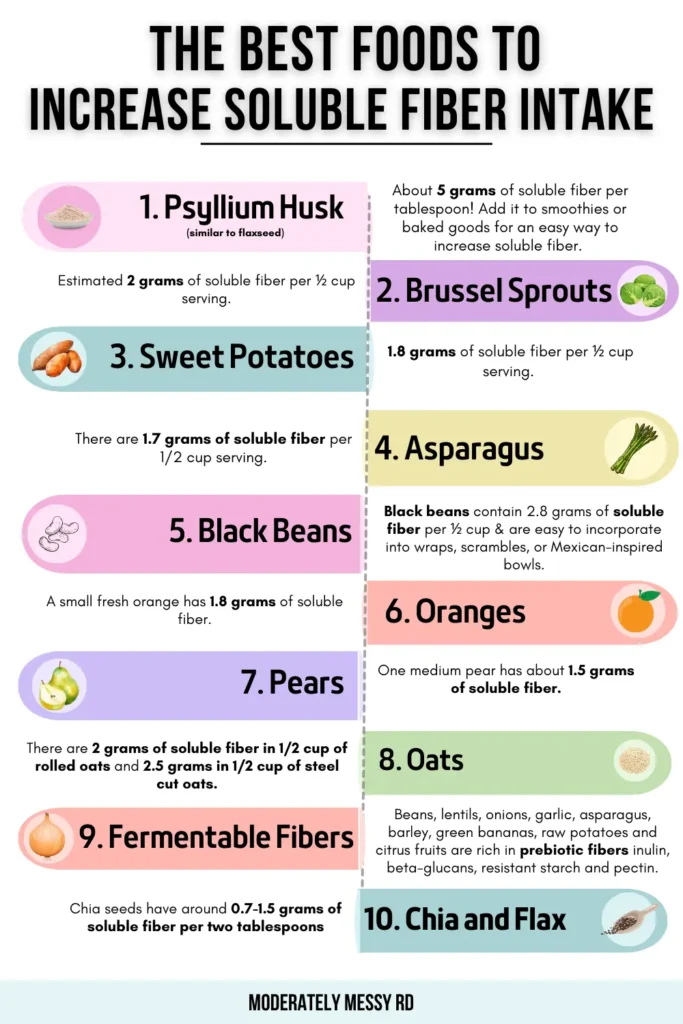
There are 2 grams of soluble fiber per 1/2 cup serving.
Asparagus
There are 1.7 grams of soluble fiber per 1/2 cup serving.
Sweet Potatoes
There are 1.8 grams of soluble fiber per 1/2 cup serving.
Carrots
There are 1.1 grams of soluble fiber per 1/2 cup serving.
Apples
One medium apple has about 1 gram of soluble fiber.
Pears
One medium pear has about 1.5 grams of soluble fiber.
Oranges
A small fresh orange has 1.8 grams of soluble fiber.
Oats
There are 2 grams of soluble fiber in 1/2 cup of rolled oats and 2.5 grams in 1/2 cup of steel cut oats.
Beans
A 1/2 cup of black beans has 2.4-2.8 grams of soluble fiber! Kidney beans and navy beans also have over 2 grams per 1/2 cup serving.
Chia Seeds
Two tablespoons of chia seeds has about 10 grams of total fiber and an estimated 7-15% is soluble fiber. This comes to about 0.7-1.5 grams of soluble fiber per two tablespoons.
Psyllium Husk
A super convenient idea to increase soluble fiber, without necessarily taking a supplement, would be to buy psyllium husk – which can be used just like flaxseeds. Throw into your smothies or add to homemade protein bars. One tablespoon has about 5 grams of soluble fiber!
The Best Fermentable Fiber Foods
Beans, lentils, onions, garlic, asparagus, barley, green bananas, raw potatoes and citrus fruits are rich in prebiotic fibers inulin, beta-glucans, resistant starch and pectin.
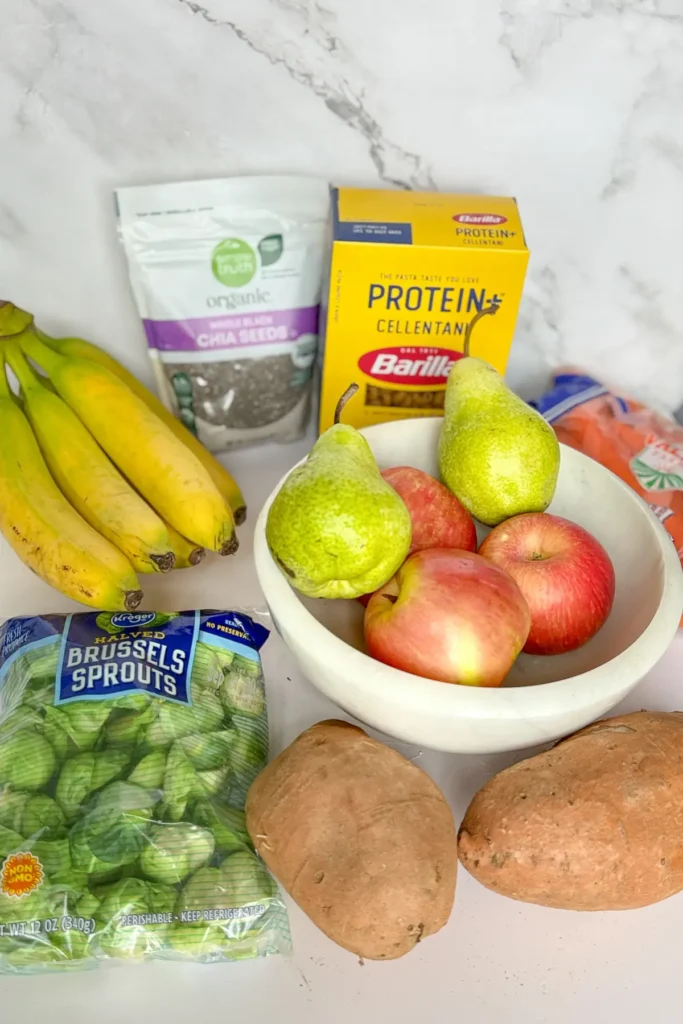
I also want to mention Barilla Protein Plus Pasta has about 3 grams of soluble fiber per serving! Read nutritional labels – some will specify soluble versus insoluble.
Soluble Fiber Supplements
One of the most convenient ways to increase soluble fiber intake is to find out a supplement that fits your goals. The majority of fiber supplements consist of soluble fiber, it is just deciding: which type?

For more detail on fiber supplements, check out my Comprehensive Fiber Supplement Guide.
- NOW Inulin Powder: prebiotic fiber that is not always ideal for sensitive tummies but great for improving the composition of the gut microbiome.
- Metamucil. Psyllium fiber is one of the most researched types of soluble fiber specifically helpful for digestive and heart health. It usually comes in a powder to mix in water – which actually is very helpful since drinking a lot of water is recommended when consuming fiber.
- NOW Psyllium Husk Powder (more fiber per serving than Metamucil).
- Benefiber Prebiotic Fiber, best to consume 2-3 times per day.
- NOW Foods Supplements, Beta-Glucans with ImmunEnhancer; Well-known benefits like lower LDL cholesterol, improved insulin sensitivity, immune support and blood sugar response.
- Nutricost Beta-Glucan Supplement
Recipe Ideas & Tips
There are currently no specific recommendations per day for soluble fiber but the general goal is 6-12 grams per day. Total fiber recommendations vary depending on age and gender, typically ranging from 25-38 grams per day.
Easy Ways to Eat More Soluble Fiber
Adding soluble fiber doesn’t have to mean a major diet overhaul. Here are some simple ways to fit it in:
- Start your day with oats. Overnight oats with chia seeds, a spoonful of peanut butter, and apple slices.
- Upgrade your smoothie. Blend in psyllium husk or flaxseeds plus oranges, apples or pears.
- Swap your sides. Choose barley or lentil soup instead of plain white rice.
- Snack smart. Apple slices with almond butter or roasted chickpeas.
- Bake with a boost. Add psyllium husk or ground flaxseed to muffins or breads.
- Add garlic and onion more often. Both are rich in prebiotic fiber.
Sample Meal Plan
Breakfast = about 4.5 grams of soluble fiber
- 1 cup cooked oatmeal (2 g soluble)
- 2 Tbsp chia seeds mixed in (1.5 g)
- 1 medium apple, chopped (1 g)
More healthy breakfasts with oats:
- Berry Cheesecake Overnight Oats
- Mediterranean Savory High Protein Oatmeal
- Creamy Pistachio Pudding Overnight Oats
- Key Lime Pie Raspberry Overnight Oats
Lunch
Vegetarian Barley Lentil Soup (Homemade Yummy) with 19 grams of fiber per serving. This soup is packed with soluble fiber foods like barley, lentils and carrots!
Dinner
Chicken Fajita Bowl featuring black beans, corn, onions, bell peppers, avocado and rice that has resistant starch in it (a prebiotic fiber).

Snack Ideas
- A pear
- A medium orange
- Carrots dipped in hummus
- Black bean brownies
- Roasted chickpeas or edamame
- Smoothie with psyllium husk
So, to sum it up, focusing on overall fiber intake is still my top recommendation to improving overall health – but more awareness of soluble fiber foods really just takes it to the next level. I hope this post was helpful – subscribe and follow along for more evidence-based nutrition and healthy recipes.