
Resistant starch (RS) is a unique type of carbohydrate with some impressive benefits – it feeds your gut bacteria, helps you stay full longer, and supports balanced blood sugar levels. If you’ve followed me for a bit, you know I’m not here to bash carbs; I’m here to help you use them to your advantage. Here are 6 easy ways to add more resistant starch to your diet!
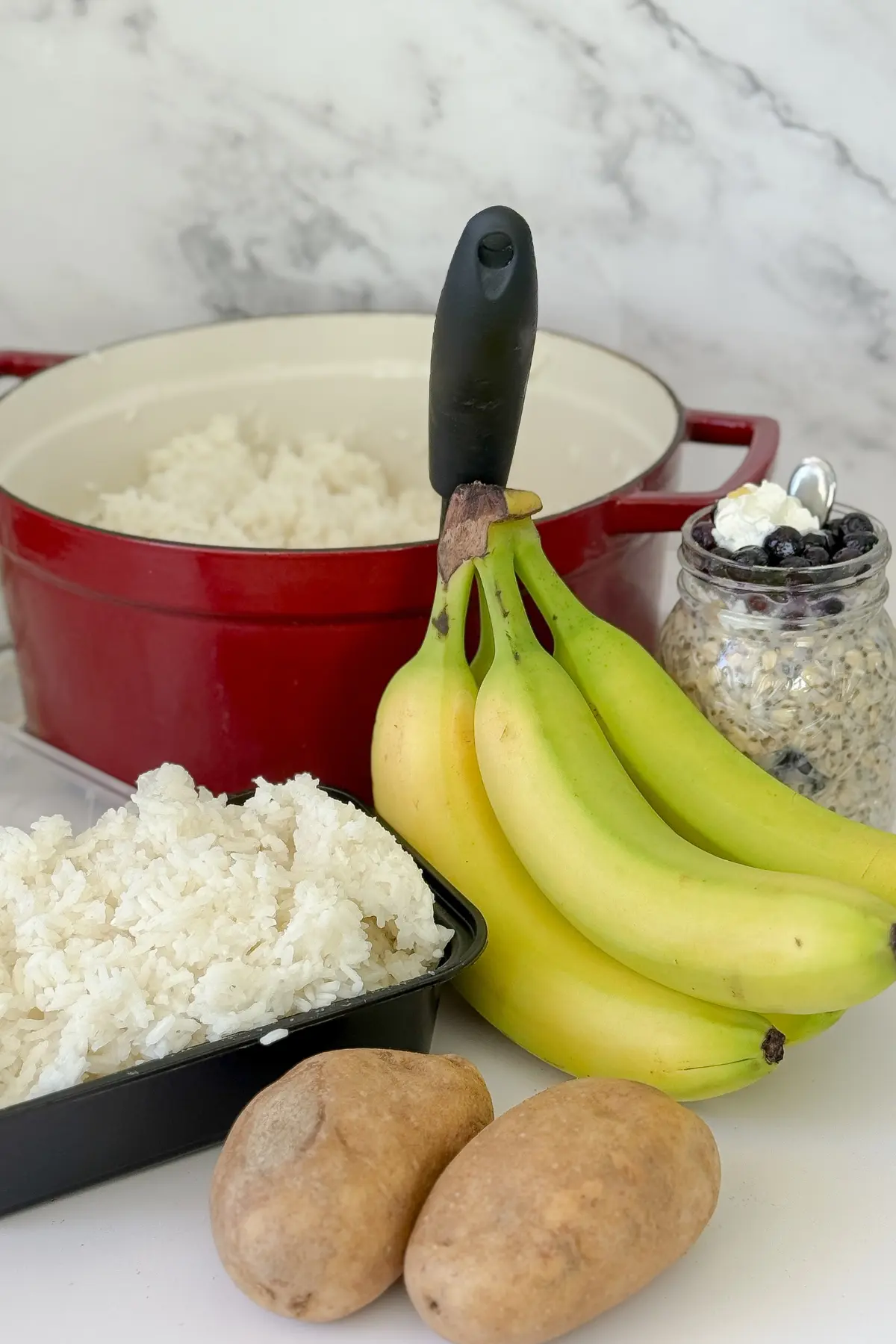
This overview goes over what it is, why it has the potential to be so beneficial, simple ways to increase food consumption of it, my supplement recommendations, and even recipes to help your consumption. The more you know, the better! Plus, I think it’s really interesting.

What is Resistant Starch?
Resistant starch has received a lot of attention recently for all of the potential it has to improve the composition of the gut microbiome. So, what the heck is it?
It is a type of starch that escapes digestion, survives passage through the stomach and small intestine to reach the colon where it is then fermented by certain microorganisms. This fermentation process produces short-chain fatty acids, like butyrate, propionate, and acetate. These short-chain fatty acids improve the environment for impactful bacteria to thrive.
Butyrate is a short-chain fatty acid that helps fuel the cells lining the colon and supports gut-barrier and immune function.
Researchers are also studying its potential role in inflammation, metabolic health, and colon-cancer prevention, although consuming more resistant starch doesn’t guarantee these outcomes.
In a nutshell: resistant starch is one of the best types of fiber at increasing butyrate, which then provides numerous health benefits. But not every individual receives the same benefits. It’s complex. Some will experience benefits in a few weeks while others may not be quite as responsive to resistant starch.
There are four types of resistant starches, classified according to structure or source.
- RS1: whole or partially milled grains, seeds, and legumes.
- RS2: raw potatoes, underripe bananas, some legumes, and high-amylose starches, such as high-amylose corn.
- RS3: sources produced by the cooking/cooling process; bread, tortillas, cooked and cooled potatoes, rice, and pasta.
- RS4 is a chemically modified starch found in a wide range of products.
Benefits of Resistant Starch
Important note: research suggests that resistant starch may provide several gut and metabolic health benefits. However, results vary depending on the type and amount consumed, the food source, and the individual.
Much of the stronger research has also used larger amounts of supplemental resistant starch, so these benefits cannot necessarily be attributed to simply cooling and reheating food.
- Weight management because foods with more resistant starch are less calorically dense.
- Increased fecal weight, prevention of constipation and reduced risk of colon cancer.
- Resistant starch escapes digestion in the small intestine so it doesn’t contribute to blood glucose levels. Studies also suggest that resistant starch can reduce insulin resistance.
- Lower blood glucose after a meal.
- Last but not least, all of the gut health benefits. Improvement in the composition of our gut microbiome.

6 Ways to Increase Intake of Resistant Starch
The amount of resistant starch in a food changes depending on how it is prepared. For example, as bananas ripen, their resistant starch gradually converts into regular starch, making them less resistant over time.
If you follow these simple hacks, consuming carbohydrates will far outweight any of the risks- not only helping with weight management but gut and mental health and prevention of diseases.
This post includes Amazon affiliate links. At no additional cost to you, I receive a small compensation if a purchase is made.
1. Eat Slightly Green Bananas or Plantains
As I mentioned earlier, the longer a banana ripens, the less resistant starch it will contain.
An underripe banana has 4.7 grams of resistant starch, which is higher than most food sources. So, if you can tolerate just quickly consume a slightly green banana, you will get maximized benefits from resistant starch.
Green bananas are also considered low FODMAP, and better tolated by people with IBS!
While they’re not as sweet as ripe bananas, there are plenty of tasty ways to enjoy them. You can boil or bake them like plantains for a savory side dish, slice and roast them into chips, or blend them into smoothies for a subtle, creamy texture without added sugar.
You can also mash them and mix into oatmeal, pancakes, or muffin batter for extra fiber, or cut them into chunks to air-fry with a drizzle of olive oil and sea salt. If you’re feeling adventurous, try adding green banana flour to smoothies or baked goods – it’s another great way to get those resistant starch benefits without the bitter taste.
2. Cook, Cool, and Reheat Starchy Foods (Rice, Potatoes, Pasta)
Certain starches can actually become healthier when cooked and then cooled – thanks to a process called retrogradation, which increases their content of resistant starch.
Foods like potatoes, rice, pasta, and oats are great examples. When you cook these foods and then let them cool for several hours (or overnight), some of the starch molecules rearrange into a form that resists digestion.
This is one of my favorite tricks: batch cooking a large amount of rice and cooling it. Not only does this increase the resistant starch, but helps streamline dinners for the next couple of weeks!

Rice can be frozen for up to 3 months and this does not affect the resistant starch content. Reheating cooled rice does not seem to affect RS, either!
Recipe Ideas
These bowls are my go-to dinner recipes and utilize cooked and cooled rice.
- Customizable Shrimp and Rice Bowl
- Customizable Chicken Fajita Bowl
- Potato salads are another great idea to utilize cooled potatoes.
3. Eat More Beans and Lentils
Beans and legumes provide large amounts of fiber and resistant starch, regardless of if they are cooked and cooled. However, cooling the cooked legumes for up to 24 hours in the refrigerator increases the level of resistant starch to 5-6% of total weight.
Good sources include garbanzo beans, garden peas, pinto beans, black beans and soy beans. A 1/2 cup of lentil provides 3.5 grams of resistant starch.
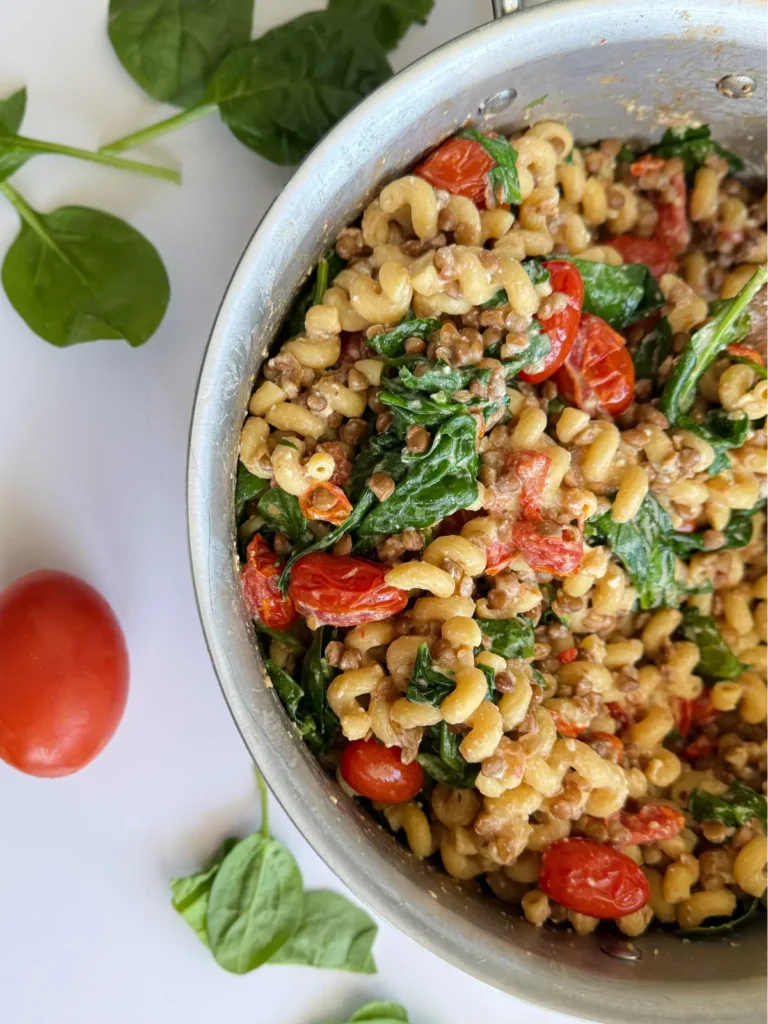
Recipes with Beans and Legumes
Beans and legumes are so versatile and can be thrown into any meal – breakfast, too!
4. Try More Whole Grains
Several healthy grains contain high amounts of resistant starch, like sorghum and barley. Sourdough bread is also one of the highest types of bread with resistant starch! Also, look for 100% whole grain bread or breads that have a high amount of fiber in it.
Also, guess what? Freezing your bread can boost the resistant starch content. Homemade and bakery bread is more likely to have a substantial effect. If you want bread with maximum benefits, freeze a loaf of sourdough!
5. Enjoy Oats “Overnight”
Overnight oats are an easy and delicious way to include oats, which naturally provide some resistant starch along with beta-glucan, a well-studied form of soluble fiber.
However, simply soaking oats in cold liquid does not necessarily create additional resistant starch through retrogradation, and research directly comparing overnight oats with cooked oatmeal is limited.
Even without a dramatic resistant-starch boost, overnight oats can still make a nutritious and convenient breakfast.
Add Greek yogurt or protein powder, fruit, chia seeds, nuts, or nut butter to create a satisfying combination of protein, fiber, and healthy fats that can support fullness, gut health, and a steadier blood-sugar response.

Absolutely Delicious Overnight Oats Recipes
6. Try a Potato Starch or a Supplement
A lot of people use raw potato starch as a supplement in order to boost the resistant starch content of their diet. Potato starch is typically used as a thickener in soups or sauces, however, it’s important to not heat the potato starch. Instead, prepare the meal and then add the potato starch once the dish has cooled.
Put potatato starch in:
- smoothies
- overnight oats
- yogurt
If you decide to try potato starch or another resistant-starch supplement, start with a small amount and increase it gradually. Because resistant starch is fermented in the colon, adding too much too quickly may cause gas, bloating, or changes in bowel habits.
Individual responses vary, and these supplements should not be viewed as a guaranteed strategy for improving gut health, blood sugar, or weight loss.

Since resistant starch is such a hot topic these days, there are more and more supplements becoming available. Still not many, though. Of course, you should first try to get your resistant starch from food – but here are some options to offer an additional boost.
Supplement Recommendations
- Bob’s Red Mill Potato Starch
- Jonny’s Organic Resistant Starch with ingredient green banana flour
- Dr. Christianson Resistant Starch Powder (again, green banana flour)
I hope this was an informative post that helps you stay on top of the latest nutrition research and gives you new recipes / meal ideas to benefit your health! Feel free to follow along for more evidence-based nutrition and healthy recipes.
What about canned beans-any variety? They have been previously cooked, so does that mean the resistant starch is already higher? And what about frozen peas or edamame?
That is a great question! Yes, canned beans of any variety AND frozen edamame would have more resistant starch since it has already been cooked. Hopefully, there will be more studies on this and testing the resistant starch content in the future.