
With the rise in popularity of “GLP-1 boosting” supplements, I have noticed many people are being influenced to make purchases without fully understanding how these supplements work. This comprehensive guide, including supplement reviews, is designed to help you navigate the hype and make informed choices so you’re not wasting your money.
All of this hype comes from the rise in popularity of medications like Ozempic and Wegovy. However, our body naturally produces GLP-1 and there are dietary strategies that can enhance this production.
Enter: GLP-1 supplements. Everyone wants that “magical solution” without having to spend thousands on the actual medications. I understand that, I really do, but it is hard to read comments on social media where it’s clear that many consumers have no idea what they are actually buying.
GLP-1 Booster” is a vague term that can refer to several different mechanisms involved in stimulating GLP-1 production. Which “boosters” are worth it and why? Let’s discuss!
How GLP-1 Works
GLP-1 is a shortened name for a GLP-1 receptor agonist, or glucagon-like peptide 1 recept agonist. It is a hormone produced by our body with numerous metabolic effects like stimulating the secretion of insulin, delaying gastric emptying, suppressing glucagon release, and signaling to the brain feelings of fullness.
The GLP-1 medications mimic this hormone and have longer lasting effects as compared to diet and lifestyle interventions that increase it.
Foods That Increase GLP-1 Naturally
With the right diet and lifestyle habits, our body’s production of GLP-1 can be enhanced – offering the same benefits as medications for appetite and weight management. However, GLP-1 medications have longer lasting effects – so these strategies will not have quite the same intensity or duration.

Understanding what foods can enhance our body’s natural production of GLP-1 can help you decide 1) if you really want to buy a supplement when you can just consume the ingredients in said supplement 2) help you understand why that supplement is “GLP-1 booster”.
Foods That Increase GLP-1 (In a Nutshell)
Read How to Increase GLP-1 Without Medication for a more in-depth overview on how to increase GLP-1 naturally. Also check out my GLP-1 4-Day Meal Plan to increase your body’s GLP-1 with food.
1. Well-balanced meals with protein, fiber and healthy fats
Meals that combine protein + fiber + fat result in stronger and longer-lasting GLP-1 secretion than carbs alone. Even further, protein and fiber are the two nutrients that, when combined, also promote delayed gastric emptying – which keeps you fuller for longer and reduces appetite.
2. Foods that increase Akkermansia Muciniphila
Akkermansia muciniphila is a beneficial gut microbe that has been linked to improved metabolic health. It is indirectly responsible for stimulating GLP-1 secretion. You cannot consume it through food but certain foods can support its’ growth.
3. Foods that increase butyrate production
Consuming foods with soluble fiber creates short-chain fatty acids like butyrate, which directly stimulates GLP-1 production. Some foods contain butyrate, like hard cheese and some dairy products, while other foods increase production.
4. Fermented foods to increase the good bacteria in the gut
Fermented foods like kimchi, kefir, kombucha, and sauerkraut not only increase butyrate production but help to create a more balanced gut microbiome – which has been shown to enhance GLP-1 production.
GLP-1 Supplement Reviews
I have seen an increase in advertisements for “GLP-1 boosting” supplements on social media. Are they worth the hype or a waste of money?
These supplements are not as intense as GLP-1 medications, however, some contain ingredients that increase GLP-1 production in the body. Most of the supplements that market this claim are based on small clinical trials, mostly in mice. Therefore, proceed with caution regarding any GLP-1 enhancing supplements.
This post does contain Amazon affiliate links. At no additional cost to you, I receive a small compensation if a purchase is made. However, I recommend only buying supplements from Amazon if directly from manufacturer and not a third-party seller.
What I Look For in a Supplement
Supplements are not regulated by the FDA. This means that companies can make these big marketing claims and have great advertising with little regulation on what is actually in the supplement. Here are some things to think about when buying one.
- More transparency, the better. Does the company explain how the supplement supports GLP-1 (e.g., through berberine, inulin, or bitter melon)? If there are “gimmicky” marketing claims but little transparency then it’s a no from me. For example, avoid “proprietary blends” when possible—these often lump ingredients together without disclosing what this even means or how much.
- Unrealistic claims. Branching off the above point, avoid brands that promise “magic pill” results—these are usually a red flag.
- The exact, specific ingredients with the amounts of each one. Dosage matters: even if an ingredient has solid research, it needs to be in the right amount to be effective.
- Information that the supplement has been third-party tested should be easy to find or right on the label. Look for “NSF” or “USP” or “Informed Choice” for reputable third-party organizations.
- The supplement has research studies to back it up, even better if there is clinical research using that supplement specifically. in-house studies may have bias unless independently replicated.
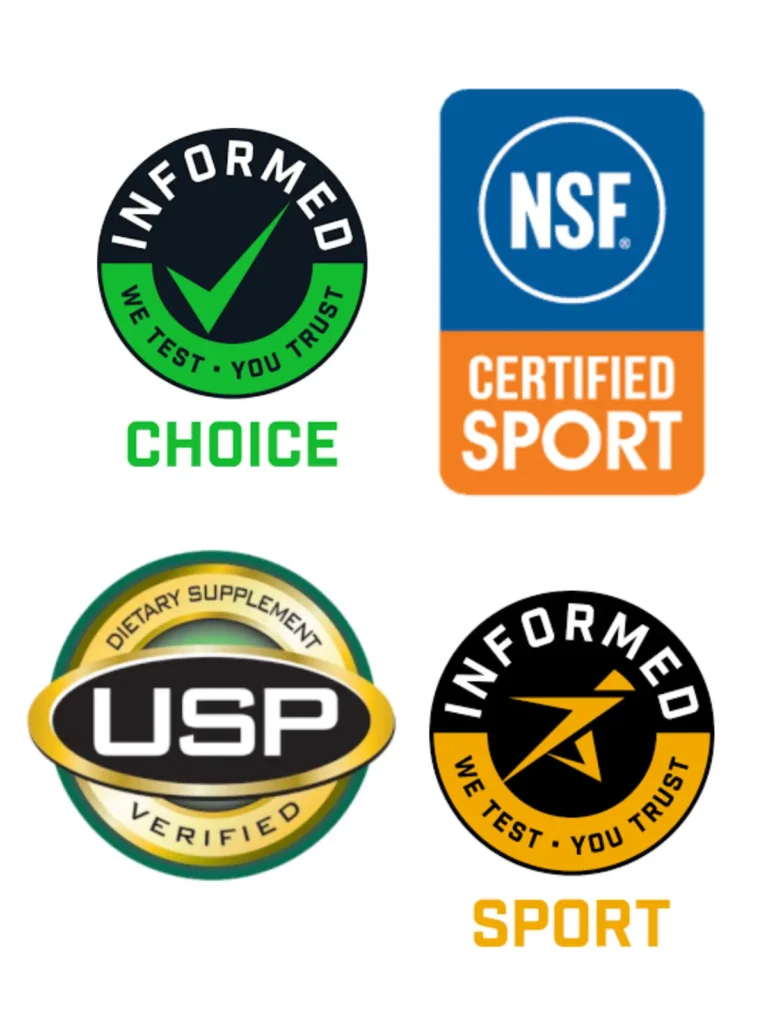
If you cannot figure out if a supplement has been third-party tested, this is a major red flag. I am all about transparency when it comes to dietary supplements: the ingredients should be easy to find, how much of each ingredient, whether it has been third-party tested, as well as what “research” has been done.
Berberine Supplements
Often coined as “nature’s Ozempic”, berberine is derived from a variety of different plants. It exerts similar effects as the diabetes medication Metformin, enhancing insulin sensitivity.
As for how it relates to GLP-1, a 2024 study found that berberine significantly increased GLP-1 levels. Even further, a 2020 meta-analysis found a significant reduction of body weight associated with berberine intake.
The problem is that there are so few studies regarding using these supplements for weight loss so who is to say if these supplements really make a difference or not. The potential is there, though.
Pros and Cons of Berberine Supplements
Pros:
- There are clinical research studies that have found an association with berberine intake and an increase in GLP-1.
- Several of these studies have shown that Berberine intake may lower fasting and long-term blood sugar in individuals with type 2 diabetes.
- Relatively safe with potential side effects such as diarrhea, constipation and stomach pain.
Cons:
- Most of the research has been done on animals. Further research needs to be done to really understand the correct dosage and relationship of berberine and weight loss.
- May cause digestive upset like bloating, constipation and diarrhea.
- There is no well-established dosage. However, current recommendations are 2-3 500 mg capsules or doses per day.
Below is a comparison of two supplements which contain berberine: Thorne Berberine Capsules versus Forest Leaf Berberine HCl Complex. Both of these supplements contain the current recommended dosage, however, Forest Leaf is slightly cheaper.
Thorne is a more well-established and trusted brand though – known for its commitment to high-quality manufacturing practices, including rigorous testing for purity and potency.
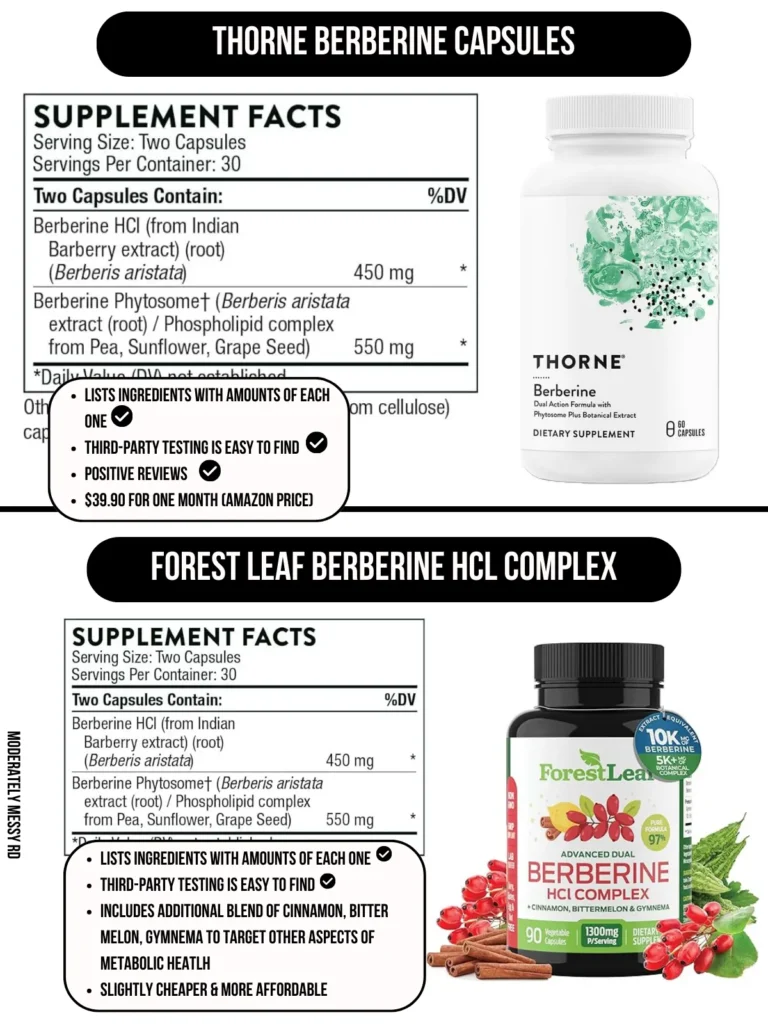
Both of these supplements are third-party tested with positive customer reviews.
Inulin or Fiber Supplements
These fiber supplements can offer many health benefits, however, we can easily get these same ingredients from food! That being said: a high quality fiber supplement isn’t a bad idea if you just can’t seem to consume enough soluble fiber from foods.
Many “GLP-1 boosting” supplements contain prebiotic fiber that promotes SCFA production (like butyrate), which can stimulate GLP-1 release in the colon. Inulin, for example, is a prebiotic fiber naturally found in many plants, including chicory root, onions, garlic, and Jerusalem artichokes.
There are many fiber supplements which do not explicitly say “GLP-1 boosting” but contain the same ingredients as those that do. Look for the words psyllium or inulin or prebiotic fiber in the ingredients without any sketchy marketing claims.
Specifically, use the infographic I listed above with the food sources to increase GLP-1 levels – and those should be on the ingredients list.
Let’s compare two supplements. First we have Now Inulin Supplement, which is made by a very reputable company that is third-party tested, afforable, and transparent with ingredients. Another good one from this company is Now Prebiotic Fiber Supplement.
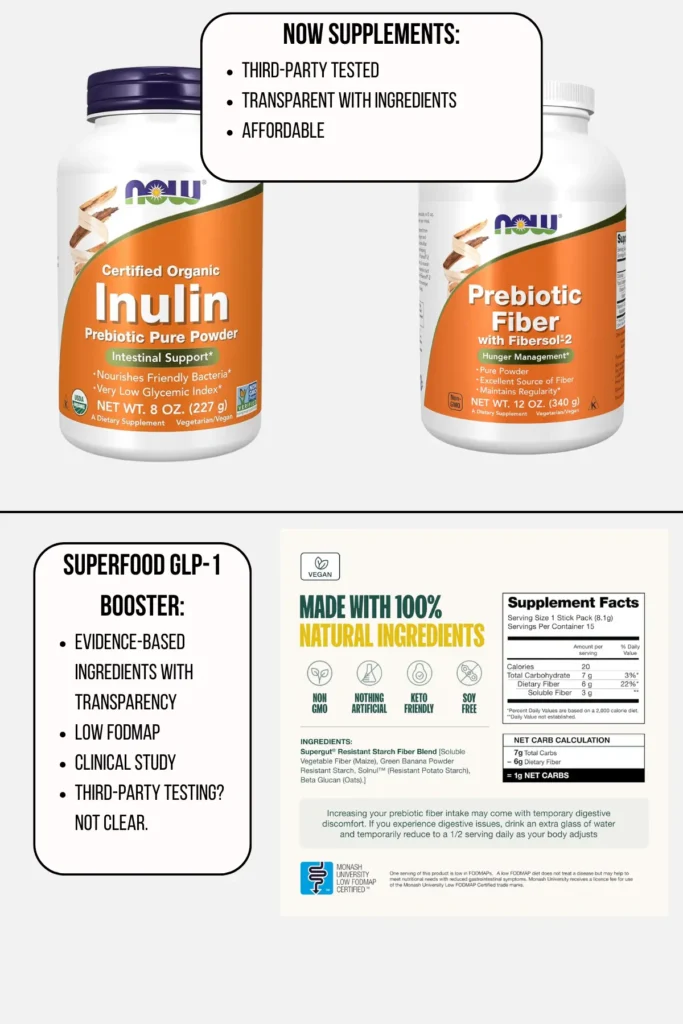
Then, we have Super Gut Healthy GLP-1 Booster which I see advertised often. My thoughts: it is hard to find if it is third-party testing or not. However, I love that it clearly lists the ingredients which are in line with the foods I recommended already.
Plus, there is a published double-blind, placebo controlled study using this supplement. I do like that they clearly state this is a low FODMAP product as some fiber supplements are not ideal for those with IBS.
Final verdict: NOW Prebiotic Fiber with Fibersol-2 is affordable, third-party tested with evidence-based ingredients to back it up! NOW is a trusted, transparent company and I would highly recommend this supplement.
Hum Flatter Me Fiber GLP-1 Booster
The Hum Flatter Me Fiber GLP-1 Booster is often advertised on social media, so I felt like I should cover it. This supplement states it is formulated to double GLP-1 levels with clinically backed prebiotic fiber.
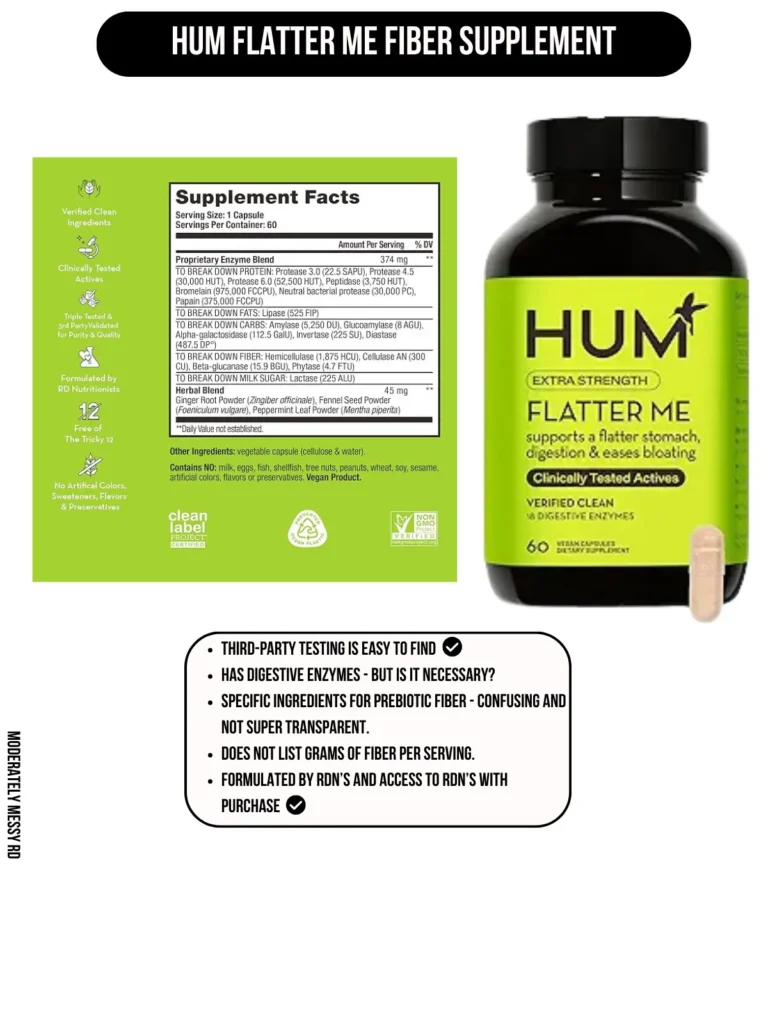
It also contains 18 digestive enzymes to “debloat faster”. These digestive enzymes may be helpful in reducing digestive symptoms for those with IBS, however, likely not necessary for the average person. Most of all, though, it is stated that there is “prebiotic fiber” but very little transparency what this means.
The website references one 2015 study that doubled GLP-1 levels with a specific amount of prebiotic fiber – the same amount has two servings of the Hum Flatter Me Fiber supplement. The serving size is two teaspoons yet the amount referred to in this study, to double GLP-1 levels, is four teaspoons. A bit misleading!
I love that this supplement is RDN-formulated and customers get access to a RDN, however, this supplement might be a waste of your money.
Akkermansia Muciniphila Supplements
Akkermansia muciniphila is an emerging probiotic linked to improved gut integrity and metabolism. This benefical microbe does not directly increase GLP-1 production but makes the gut a better place for other good bacteria that make short-chain fatty acids (SCFAs) like butyrate and propionate. These SCFAs tell special cells in your gut (called L-cells) to release more GLP-1.
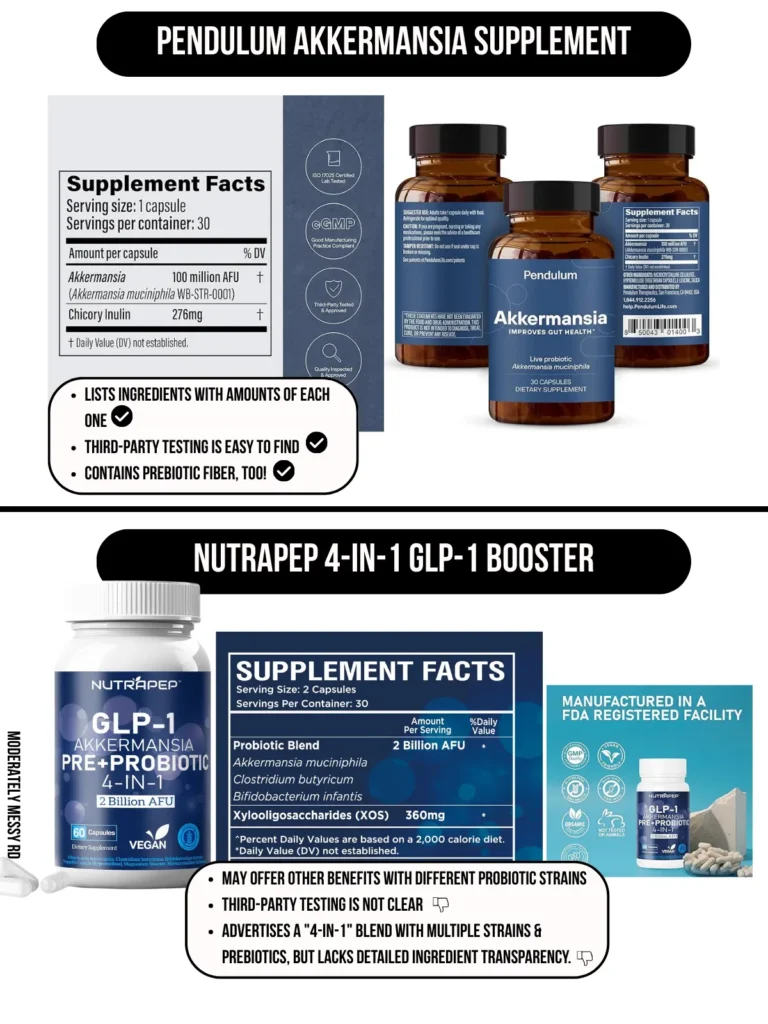
You cannot consume Akkermansia from food because it has very specific survival needs, however, they have figured out a way to put this bacteria in supplement form. Let’s compare two different supplements below.
Pendulum Akkermansia Supplement
Pros:
- Transparency with ingredients and amounts of each one.
- Third-party tested.
- Each capsule includes 276 mg of chicory inulin, a prebiotic fiber that supports the growth of beneficial gut bacteria.
- Positive reviews.
Cons:
- High cost.
- Requires refrigeration.
- While Akkermansia muciniphila shows promise, more extensive human clinical trials are needed to fully establish its efficacy.
Overall, Pendulum Akkermansia Muciniphila supplement seems trustworthy and possible effective with prebiotic fiber included! Nutrapep, on the other hand, I would question.
The product’s labeling does not provide detailed information about the specific strains used or their exact quantities, which can be crucial for assessing efficacy.
Nutrapep Akkermansia 4-in-1 GLP-1 Booster
Pros:
- May offer other health benefits along with the increase in GLP-1 as it has other probiotic strains listed.
Cons:
- Makes claims that the supplement is made in a FDA-approved facility, however, lacks transparency with third-party testing information. Just because a supplement is manufactured in an FDA-registered or GMP-compliant facility does not mean it has been third-party tested.
- Does not list specific amount of each strain of probiotic.
- Overall, lacks transparency and clinical studies to back up this blend. Even their website does not offer enough detail for this type of supplement.
Curcumin Supplements
Curcumin is the active compound in turmeric, well-known for its anti-inflammatory properties. No curcumin supplement is currently marketed specifically as a GLP-1 booster. However, some animal studies suggest curcumin can increase endogenous GLP-1 secretion, potentially improving insulin response and glycemic control.
Pros:
- May enhance GLP-1 seceretion while offering anti-inflammatory properties as well.
- Curcumin has been shown to improve insulin sensitivity.
Cons:
- Curcumin is poorly absorbed on its own. Look for enhancers like black pepper in the ingredients.
- Most of the positive findings on curcumin and GLP-1 are from pre-clinical studies. Human trials are limited and not yet conclusive.
Other Potential GLP-1 Boosters
Research on these exact GLP-1 mechanisms is more limited, but as new studies emerge, the following supplement ingredients may be beneficial to look out for.
- Ginseng – may potentially stimulate GLP-1 secretion.
- Bitter Melon – contains compounds which can mimic insulin and may stimulate GLP-1 release. However, data is extremely limited. May slow gastric emptying and reduce post-meal blood glucose spikes, similar to GLP-1 effects.
- Green Tea Extract – animal and small human studies show GLP-1 stimulation.
This post does not go in-depth on potential side-effects or medication interactions. If you have coexisting medical conditions or are on any medications, make sure to speak with your physician prior to trying any of these supplements.
More GLP-1 Resources
- 5-Day Meal Plan to Improve Your Gut Health (Increase GLP-1 Naturally)
- 20+ Recipes High in Protein and Fiber
- How to Eat on GLP-1 Medications