
Most resolutions fizzle out by February after that initial January motivation wears off. Instead of a huge overhaul, try and focus on small changes that actually fit your life. Here are 11 simple yet effective health-focused New Year’s resolutions – pick one or two that make sense!

The reason most resolutions fail is because we think too BIG when, really, goals should be smaller, more focused, and more attainable. Aim for S.M.A.R.T. goals: goals that are specific, measurable, achievable, relevant and over a specific time frame!
If you choose something too broad, like “lose weight,” how can you even measure that? And if you set something unrealistic, like “lose 50 pounds in six months,” you’re setting yourself up for frustration instead of momentum.
Instead, think smaller and more actionable. For example:
- Instead of “eat healthier,” try “add one veggie to lunch and dinner every day for 3 months.”
- Instead of “exercise more,” try “move my body for 10 minutes after the kids go to bed five times a week.”
- Instead of “lose weight,” try “focus on 25–30 grams of protein per meal to stay full and energized five days a week.”
Those tiny, specific goals are the ones that build confidence and consistency – and before you know it, they snowball into real progress. The key is to start where you are, make one small change, and give it time to stick before layering on another.
Try my Realistic Weekly Wellness Habits Challenge if you’re feeling extra motivated – nothing too restrictive, just 5 small habits you can put into place daily that make a big difference.

Mindset Reset
Before diving into any new habits, take a moment to check in with yourself. Where are you really at right now? What’s working, what’s not, and what’s it going to take to move from thinking about change to actually doing it? Sometimes, all it takes is a small shift in mindset.
- Pause and reflect on your “what” AND you “why.” What is it that you’re hoping to achieve this year or what is it that you want out of your New Year’s resolution?
- Why do you want to feel healthier, have more energy, or be more consistent? Maybe it’s to feel less overwhelmed, to model good habits for your kids, or to simply feel more like yourself again. Take a few minutes to write that down, or say it out loud – because your “why” is what will keep you going when life inevitably gets messy.
- Try to remember that progress isn’t linear, and there will likely be ups and downs. It’s the effort and relative consistency that will make the most difference.
The Resolution Ideas
1. High Protein Breakfast
The hype for protein can be a little much these days – but there is good reason for it. Instead of eating protein just because the internet tells you to, do it so that you can reach a higher overall protein intake to preserve your lean muscle mass or promote positive changes in your body composition. To keep you fuller for a longer period of time and to help stabilize your blood sugars.

A high protein breakfast is subjective, but in my book it is one with at least 25 grams per serving. It can be tricky to do this, especially as a busy mom! Most moms I know don’t even prioritize breakfast in the first place.
Think about the typical breakfast foods that contain protein: Greek yogurt, eggs, milk, nuts and seeds, protein powder in smoothies, cottage cheese, breakfast meat, and even hemp hearts.
Then, think about those little additions that can add up: cheese, beans (like in a breakfast burrito or scramble), higher protein wraps or bread, chopped nuts, nutritional yeast, nut butters, and a yogurt addition (like on top of pancakes or on a Mexican-inspired omelet).
Already do this? Aim for at least 6 grams of fiber at breakfast!
High Protein Breakfast Ideas
- 30 Breakfasts with 30 Grams of Protein -> cereal included!
- High Protein Breakfast Burrito (shown above)
- Whipped Cottage Cheese with Berries and Balsamic
- Berry Cheesecake Overnight Oats
How did this breakfast make you feel? Did you have more energy throughout the morning? Were you less starving at lunch? Does this seem like an achievable habit that can help you with your goal?
2. Hydration Habits
Increasing your fluid intake might just help improve your brain function, energy levels, and digestion. Don’t just tell yourself you are going to “increase fluid intake”. Figure out what that even means and how you’re going to do it.
Simple Hydration Hacks
- Drink a full glass of water before your morning coffee.
- Set a timer on your phone every hour to take a sip of water. Or, download a hydration app on your phone to remind you.
- Carry around a huge refillable cup.
- Flavor your water to make it taste better! Carbonated water, add fruit or mint or cucumbers – the sky is the limit.
- Keep a full glass of water at your bedside at all times.
3. Mini Movement
Add just 10 extra minutes of activity to your day. Sounds doable, right? Something so simple can add up to 60 extra minutes of physical activity to your week. That’s like another full “workout”.
This could be a 10-minute abs workout while you’re watching TV at night, a dance party around the house with your kids, jumping jacks for a minute 10 times throughout the day, an arm workout with dumbbells while you’re making dinner, or a 10-minute walk outside. What makes the most sense for you?
4. Snack Swap
Instead of selecting the first snack that you see, make a plan to actively choose one that is a little bit higher in protein and fiber. These are the two game-changing nutrients that help to slow down the digestion of our food, keeping us fuller for longer.

Therefore, these are snacks with staying power. Not only that, but it will help you reach a higher intake of both nutrients.
Snack Ideas
- Two of my favorite portable snacks: The Only Bean Edamame and Chomps Beef Sticks!
- Apple AND peanut butter.
- Greek yogurt parfait with fruit.
- Edamame.
- A cheese stick and nuts.
- Chia pudding made with Greek yogurt.
- Smoothies.
- Roasted chickpeas.
5. Meal Prep Breakfast
Skipping breakfast can work for some people, but if you find yourself starving or overeating later in the day, it might not be serving you. Skipping breakfast can lower energy and increase cravings, especially for busy moms constantly on the go.
Breakfast can feel like a daunting task some mornings, but often all it takes is an extra 5–10 minutes. Take overnight oats, for example – just 5 minutes of prep can make multiple servings that are ready to grab throughout the week.

Breakfast burritos might take a bit more time but can be frozen for up to 3 months! This goes for breakfast sandwiches, protein pancakes, casseroles, quiches, or breakfast bakes, too.
Easy Meal Prep Breakfast Ideas {High Protein & Fiber}
- Pesto Breakfast Sandwiches {Haute and Healthy Living}
- Baked Banana Oatmeal {Living Chirpy}
- Whipped Cottage Cheese Breakfast Toast with Balsamic and Berries
- 7 Overnight Oats That Taste Like Dessert
6. Eat At Least One Meal Without Distractions
Mindful eating sounds so easy but it’s a learned skill which will take a lot of practice. Most of us are so used to eating whatever we have on our place, while mindfulness teaches us to savor every bite and stop eating when we are full or satisfied.
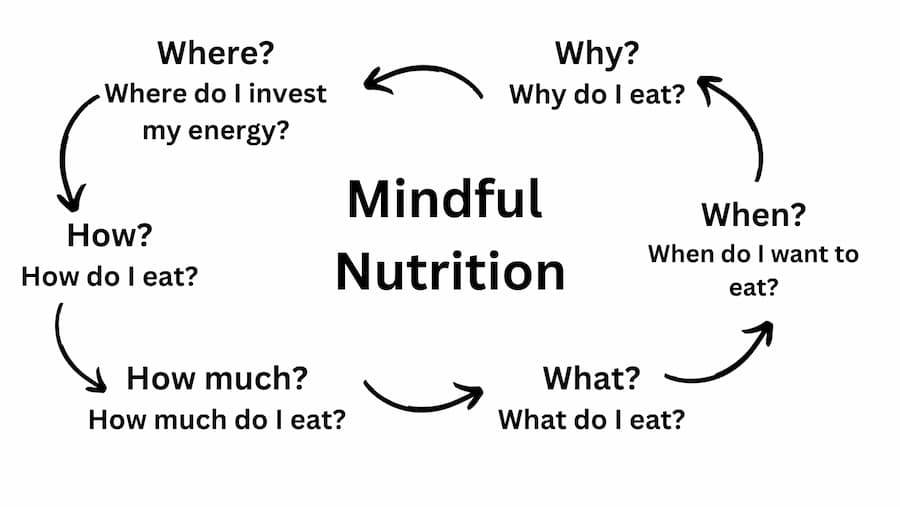
No distractions, no rushing, no phone scrolling – just you and your food. Before you take a bite, pause and take a deep breath. Notice how your meal looks, smells, and tastes. Chew slowly and check in with yourself halfway through. Are you still hungry, or starting to feel satisfied?
Basic Principles Of Mindful Nutrition
There’s no guilt, shame or anxiety when it comes to food.
Eat slowly, without distraction.
Savor each and every bite.
Honor hunger cues, like stomach growling or feeling low energy.
Recognize when you’re full and satisfied – and stop eating.
Differentiate hunger cues and the personal desire to eat.
7: Aim for 8 Grams of Fiber Per Meal
Fiber is one of the underrated nutrients: there are significant benefits of a higher fiber diet yet the majority of us are not getting enough. I definitely recommend making this one your priority, if you don’t know where to start.
There are different types of fiber that provide different benefits but if you focus on overall total fiber intake you might see weight management benefits, improved gut health, better digestion, lower risk of chronic diseases, and better blood sugar control.

8 grams of fiber per meal equals 24 grams of fiber per day. That’s a good start! Plus, I have so many resources available to make increasing your fiber consumption easy!
Increase Your Fiber Resources
8: Gut-Friendly Foods
Maybe you already eat a healthy diet but want to focus more on your gut health. Our diet plays a significant role in the composition, structure and function of our gut bacteria.
A healthier gut microbiome is then linked to better digestion, improved mental health, immune support, and lower chronic disease risk. Basically, our gut health is important for overall health – not just digestive health.
So, maybe you want to focus more on adding probiotics and/or prebiotics to your day. Foods like yogurt, kefir, beans, or cooled potatoes for resistant starch. add one per day?

9. Practice Micro Meal Prep
If you are someone who dreads meal prepping, or if it is really not your thing, then this meal prep component strategy might just be for you. Think simple tasks like washing and chopping vegetables so you can either 1) throw together a nutritious dinner easier or 2) grab those veggies and dip them into your favorite dip for a healthier snack!
Make one small thing every night or spend just 30-minutes on Sunday.
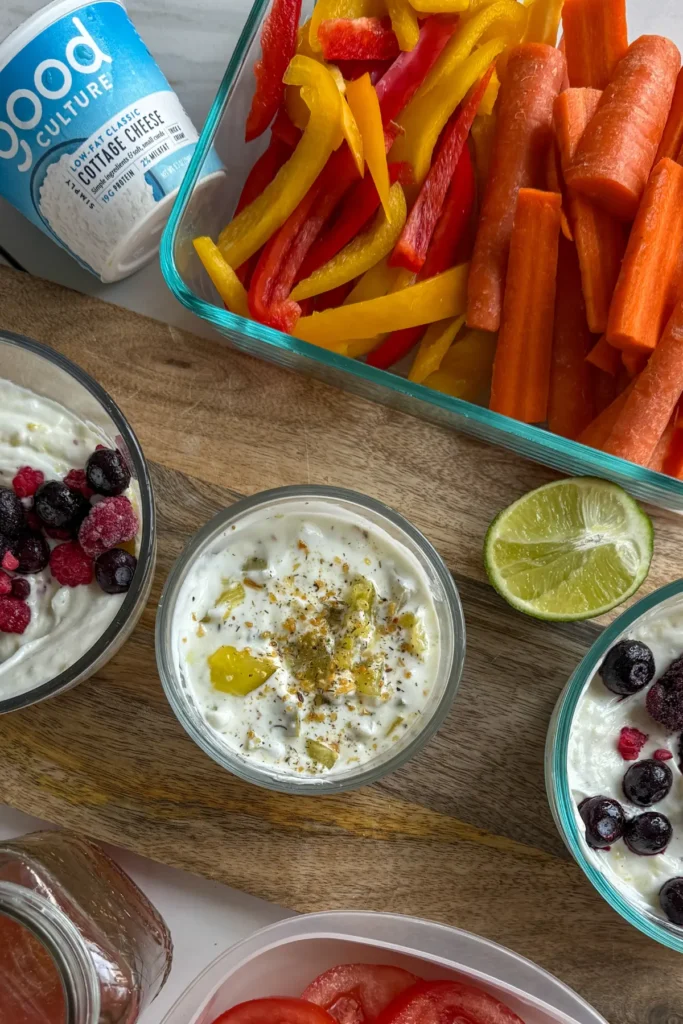
Micro Meal Prep Ideas
- Make healthy sauces or homemade dressings for the week.
- Snack prep high protein, portable snacks.
- Batch cook proteins or grains.
- Wash and chop vegetables and fruit for the week.
- Portion out trail mix or popcorn into grab-and-go containers.
- Breakfast prep overnight oats or sandwiches.
Make sure to check out my Small Task Meal Prep post for recipes ideas and a free template and checklist.
10. Adopt a More Flexitarian Approach
The flexitarian diet is a “more flexible” way to consume more plant-based meals without completely going vegetarian. There are no clear cut rules or guidelines with the flexitarian diet. The goal is to focus on more plant-based meals with meat and fish in moderation.
It’s much more sustainable than a vegetarian diet with benefits for body weight, improved markers of metabolic health, blood pressure, and reduced risk of type 2 diabetes.
Plus, usually this diet approach will likely help you consume more fiber, gut-friendly foods in general. An abundance of research has shown that consuming more plant-based meals correlates with higher fiber and anti-oxidant consumption – which is directly related to improved health outcomes.
11. Cook Dinner At Home 4 Nights a Week
Convenience foods and eating out sabotaging how healthy you eat? Cooking healthy meals at home means you have full control over what you’re eating. I know it’s hard, and we are all tired of cooking dinner, but there are shortcut strategies to make it easier.
Figure out what works for your family so you can stay consistent with this one: do you need theme nights? Dinners that require no cooking at all? One pan meals with minimal clean up? I have resources that can help you with any of these strategies.
Simplify dinner by creating a meal plan framework that will make meal planning (dinners, specifically) so much easier and faster. It’s a plug-and-play solution and I wrote an entire post about it with many ideas.

Creating a Meal Plan Framework
The beauty of the framework is that it stays the same at the big-picture level, but the recipes inside it can shift around depending on your week.
Example framework might look like:
- 3–4 anchor meals (your tried-and-true favorites)
- Keep a running list of super easy recipes that your family loves.
- No-brain dinners you could make with your eyes closed.
- Each week you can pick at least 1 to add.
- 1–2 new meals (to keep things fresh)
- 1 super easy/backup meal (frozen pizza, breakfast-for-dinner, rotisserie chicken, etc.) or formula nightb,.
- Think in meal formulas (protein + veggie + grain, soup + sandwich, one-pan skillet). This keeps things flexible and budget-friendly.
- Use up what you have to based on what you have in your pantry and fridge.
- 1 leftover or out-to-eat night
Dinners That Require No Cooking
- Easy, No Oven Dinners
- Easy Dinner Guide for Exhausted Moms
- Mediterranean Chicken Salad {Use Rotisserie or Already Cooked Chicken)
- Lentil Salad
- Dense Bean Salads
One Pan Meals and Low Prep Dinners
Reflection
I recommend writing down your very specific goal, how you are going to measure it (checklists, weekly reflection), with an action plan or resources you will need to actually achieve this resolution.
Revisit your goal weekly or biweekly – what is working and what isn’t? Goals can always be adjusted and changed, whether your priorities have changed or your motivation level has increased.
I hope this post helps you figure out how to set a New Year’s resolution that is realistic and doable with plenty of resources to help you along the way! Follow along for more evidence-based nutrition, healthy eating tips and tools and healthy recipes.